
-
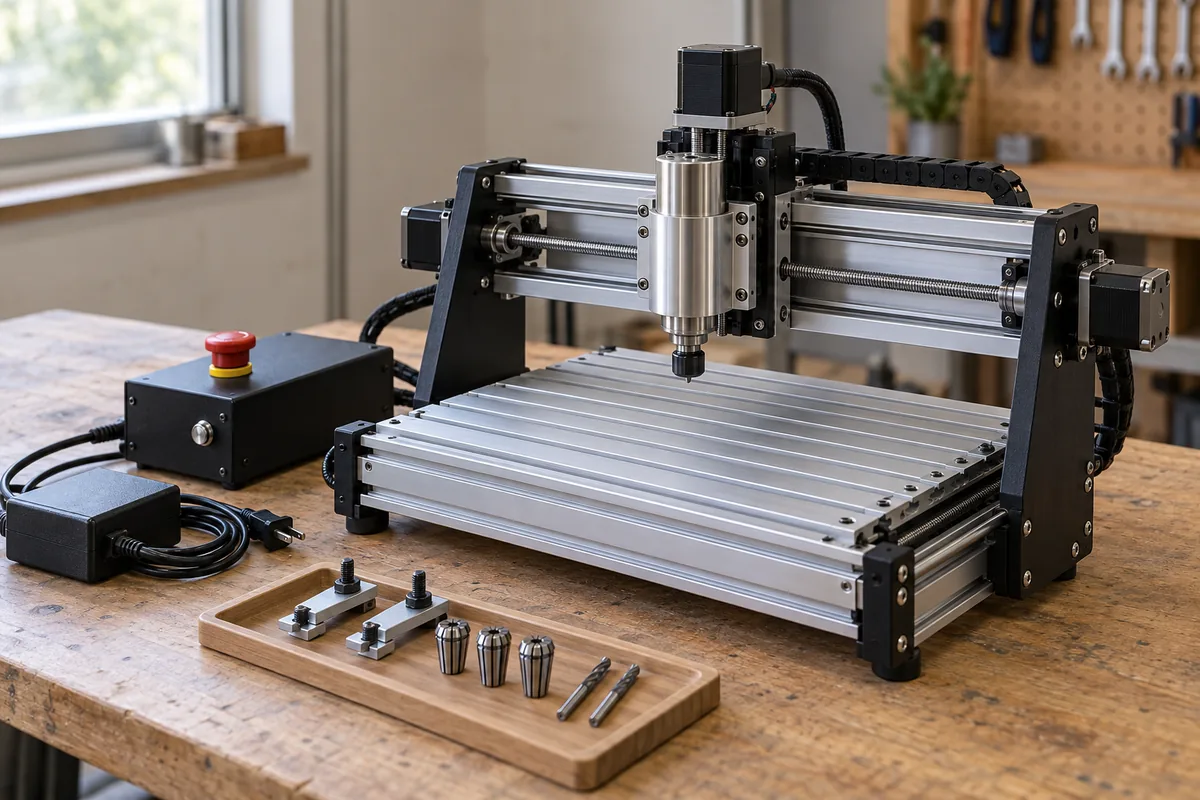
Exact machine configuration and quantity, included tooling, revision and condition.
-
Currency, exchange-rate assumption, quote date and validity.
-
Named origin and destination, postcode, delivery term and who acts as importer.
-
Outside dimensions and gross weight of every crate, stackability and lifting constraints.
In this guide
Turn this guide into a buying request
Keep this page as context. Add what you know; review everything before sending. No purchase is made at this step.
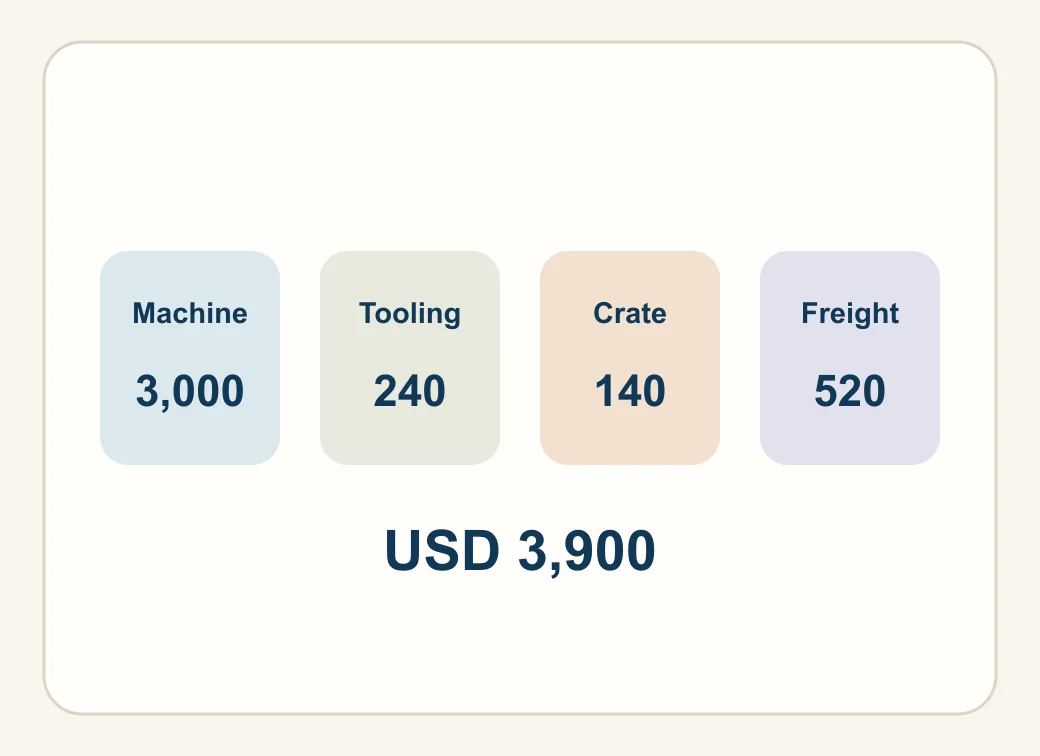
Continue to request →Illustrative quote in USD: equipment 3,000, tooling 240, crate 140 and quoted transport 520 yield a confirmed subtotal of 3,900 under this example.
A heavy CNC machine can still be charged by volume or minimum shipment charges. Get the packed dimensions and gross weight, then compare written route quotes to the same workshop destination.
Landed cost and usable cost are different totals: getting a crate delivered does not include every tool, safety measure, software licence or commissioning task needed to make parts.
Compare the equipment subtotal with the same delivery point
Illustrative quote in USD: equipment 3,000, tooling 240, crate 140 and quoted transport 520 yield a confirmed subtotal of 3,900 under this example. Duty, taxes, brokerage and unloading remain separate unless the written quote includes the exact service at the named workshop address.
- Quote revision
- Compare one complete machine configuration and the same receiving point.
- Packed shipment
- Crate dimensions and gross weight including protection.
- Commercial scope
- Record who pays clearance, local delivery and unloading.
- Pending lines
- Request a price or explicit exclusion for each missing amount.
Recheck the subtotal if a crate, accessory, service or delivery point changes. The example shows arithmetic and does not quote a route or an import assessment.
Define the quote boundary
- Exact machine configuration and quantity, included tooling, revision and condition.
- Currency, exchange-rate assumption, quote date and validity.
- Named origin and destination, postcode, delivery term and who acts as importer.
- Outside dimensions and gross weight of every crate, stackability and lifting constraints.
- Who pays destination terminal charges, customs brokerage, duty, taxes, unloading and inside movement.
Why both weight and volume matter
DHL’s published explanation compares gross and volumetric weight for air and LCL cargo, while FCL uses container-based charging. Its examples use an air divisor of 6,000 cm³/kg and a different LCL density relationship. Your carrier’s quote controls the divisor, rounding and minimums; do not reuse a parcel rule for every freight mode.
DHL Global Forwarding: chargeable weight by transport mode ↗
Two published services use different charging assumptions
We compared DHL Express UK’s parcel measuring page and DHL Global Forwarding’s transport-mode explainer on 2 October 2026. The parcel page illustrates a 5,000 cm³/kg divisor and upward half-kilogram rounding. The forwarding explainer uses 6,000 for its air example, a separate LCL relationship and container charging for FCL. These are source-specific public explanations, not interchangeable China-origin tariffs.
Our inference: a quote reading only “air, USD per kg” is incomplete. Ask for the named service, divisor, per-piece or shipment calculation, rounding, minimum, surcharges and destination scope. The lower rate per kg can still produce the larger bill when those fields differ.
Calculate the break-even instead of assuming sea is cheaper
Use the same machine, destination and delivered service boundary. Let A be the complete accepted air quote and S the complete accepted sea quote before any added inventory or deadline cost. Sea has a demonstrated cash advantage only when S is lower and the receiving date is acceptable. An unavailable or incomplete route has no comparable total.
Illustrative sensitivity only: if complete air is USD 620 and sea is USD 470, sea has USD 150 of headroom. If sea adds a required USD 180 of destination handling that air already includes, sea becomes USD 650. Likewise, an earlier arrival can justify the USD 150 difference only when that benefit is real for the buyer. No rate here is available for booking.
Do not price delay as a made-up expected loss. Write the buyer’s actual latest receiving date, any contracted cost of missing it and the fallback decision date. Obtain a local-stock or rental comparison when the project cannot tolerate an uncertain arrival.
Illustrative crate arithmetic
Assume one crate measuring 100 × 80 × 80 cm and weighing 70 kg gross. Its volume is 0.64 m³. At a hypothetical quoted air divisor of 6,000, volumetric weight is 106.7 kg, before rounding. At 5,000 it is 128 kg. In either case this particular crate exceeds its physical weight on that basis.
For an illustrative LCL quote of USD 90 per revenue ton using the greater of cubic metres or metric tonnes, 0.64 m³ exceeds 0.07 tonnes. If the quote also has a one-revenue-ton minimum, the base charge is USD 90, not USD 57.60. Origin, destination and delivery fees remain separate. These are invented rates and dimensions, not an available route.
Build the full delivery ledger
- Goods: complete machine, agreed accessories and any approved modifications.
- Origin: domestic collection, inspection or test, export packing and handling.
- Transport: freight, booking/document charges, surcharges and any separately quoted cargo cover.
- Destination: terminal/deconsolidation, broker, examination-related charges if applicable, duty and taxes.
- Final mile: appointment, residential or restricted-access service, lifting or unloading and inside movement.
- Beyond landed cost: electrical work, software, fixtures, extraction, guarding, commissioning and training.
Illustrative total: avoid counting the same fee twice
Planning example only, prepared 2 October 2026, one hypothetical machine delivered to a ground-floor US workshop, USD throughout: goods 1,400 + origin collection/packing 180 + inspection 120 + freight 350 + destination handling/broker 190 + final delivery/unloading 210 = USD 2,450 before duty, taxes and installation.
A broker-supplied tax amount T and site-work quote S produce a usable cash total of 2,450 + T + S + any tooling/software still missing. Do not invent a customs rate or treat an unknown tax line as zero. If a freight quote already includes delivery or brokerage, remove that duplicate ledger line.
Classification needs the real specification
For US imports, CBP’s classification guidance places reasonable-care responsibilities on the importer. Give the broker the machine’s function, materials processed, control, accessories, origin and condition. Do not declare a universal CNC code or duty rate from a short listing title.
US CBP: tariff classification and importer reasonable care ↗
Plan unloading separately from delivery
Confirm crate dimensions and weight against the actual vehicle, lifting equipment, floor, access route and door openings. A tail lift or pallet truck is not a universal solution for slopes, steps, soft ground or indoor placement. Obtain a competent handling plan and quote before the shipment is booked.
Compare quotes and request the missing lines
Ask for air and sea options only where each is feasible for the cargo and deadline. Use the same crate, delivery scope and validity period. A lower ocean line can lose its advantage after minimums and destination charges. Keep unknowns visible in the calculator and obtain a written quote before approving purchase.
Check the units before approving the quote
- Crate centimetres become cubic metres by dividing length × width × height by 1,000,000; kilograms become metric tonnes by dividing by 1,000. Keep the units next to each number.
- The 70 kg machine example uses packed gross mass. A bare-machine net weight from a datasheet cannot replace the crated value.
- Ask for a reconciled packing list if measured dimensions change after tooling, bracing or a pallet is added. The final quote should use the same crate IDs.
- Record tax, importer arrangements, unloading and installation as separately confirmed, included, excluded or unknown. A blank should never silently become zero.
Download the CNC delivered-cost comparison worksheet (plain text) ↗
What to ask the seller
Get details for the exact item before approving a purchase.
- What model and revision is being shipped?
- Can the seller provide photos of the actual item and its condition?
- What accessories and documents are included?
- What are its packed dimensions and weight?
Plan the CNC inspection
Ask for a photo checklist of the goods received before international shipping.

- Item, model and quantity
- Visible condition and included accessories
- Packaging before dispatch
Common questions
- Does a dense machine always ship on actual weight?
- No. Packed dimensions, transport mode, density rules, minimums and handling charges determine the bill.
- Should tooling travel with the machine?
- Compare the combined crate with separate shipments. Extra tools can change packing, gross weight, declared value or chargeable size; consolidation is not automatically free.
- Does a delivered-duty-paid quote cover installation?
- Do not assume so. Request a written list of included taxes, clearance, unloading, inside delivery and commissioning, with the named destination and importer arrangements.
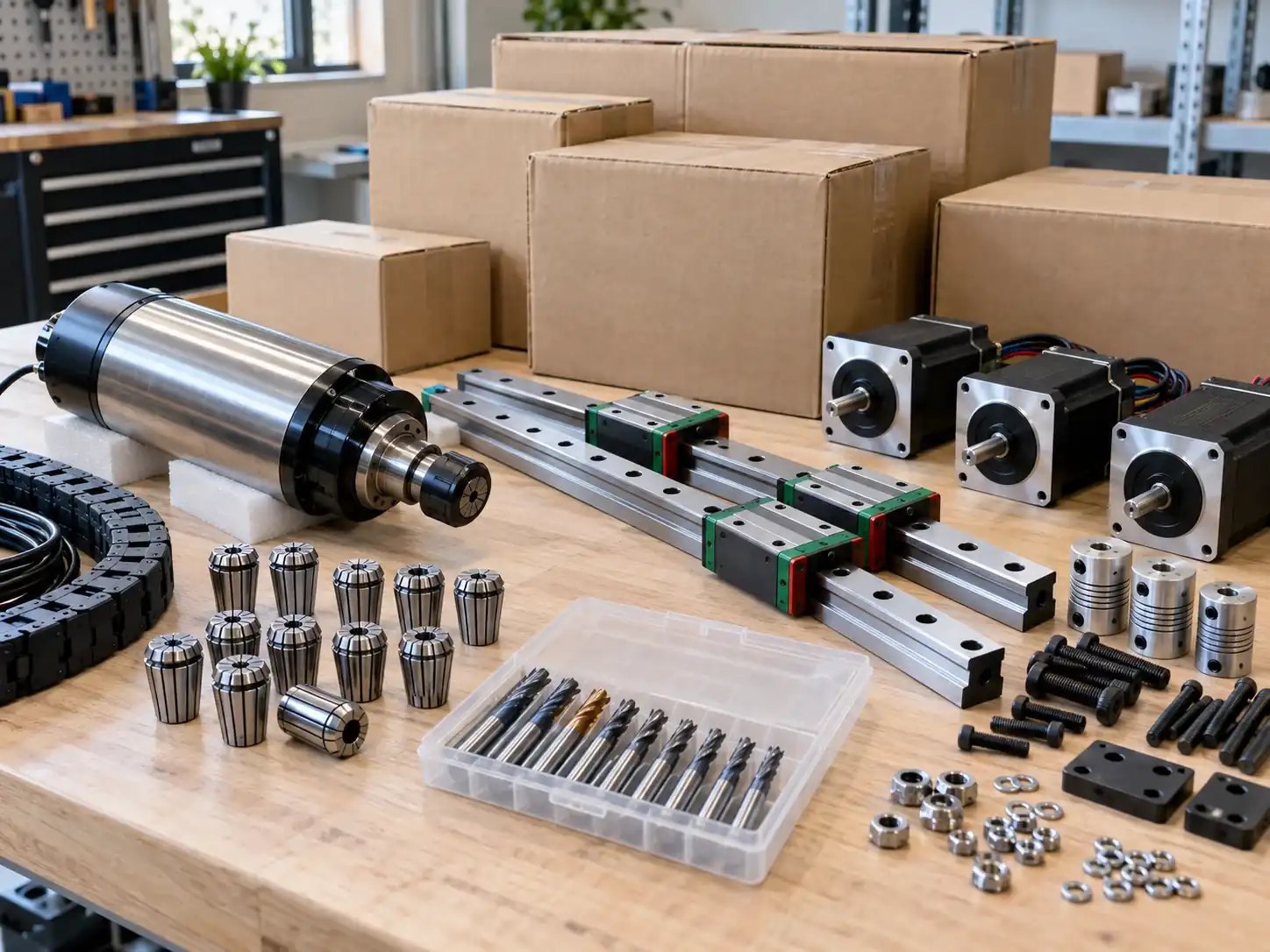 Shipping a CNC machine: packing and arrival checks
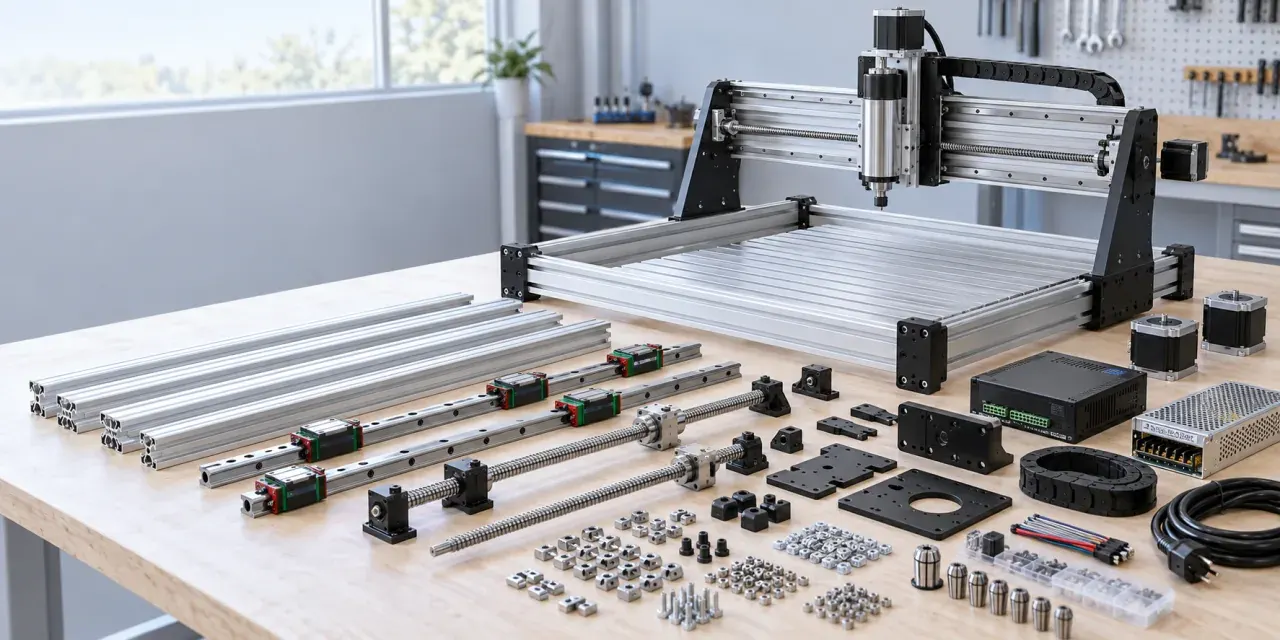 Entry-level CNC router budget: spend on a usable setup
 Low-price desktop CNC: the usable-total-cost checklist