
Check US Wood-Packaging Evidence for the Final CNC Crate
Connect the actual crate, base and added dunnage to attributable provider evidence before approving a US-bound CNC shipment.
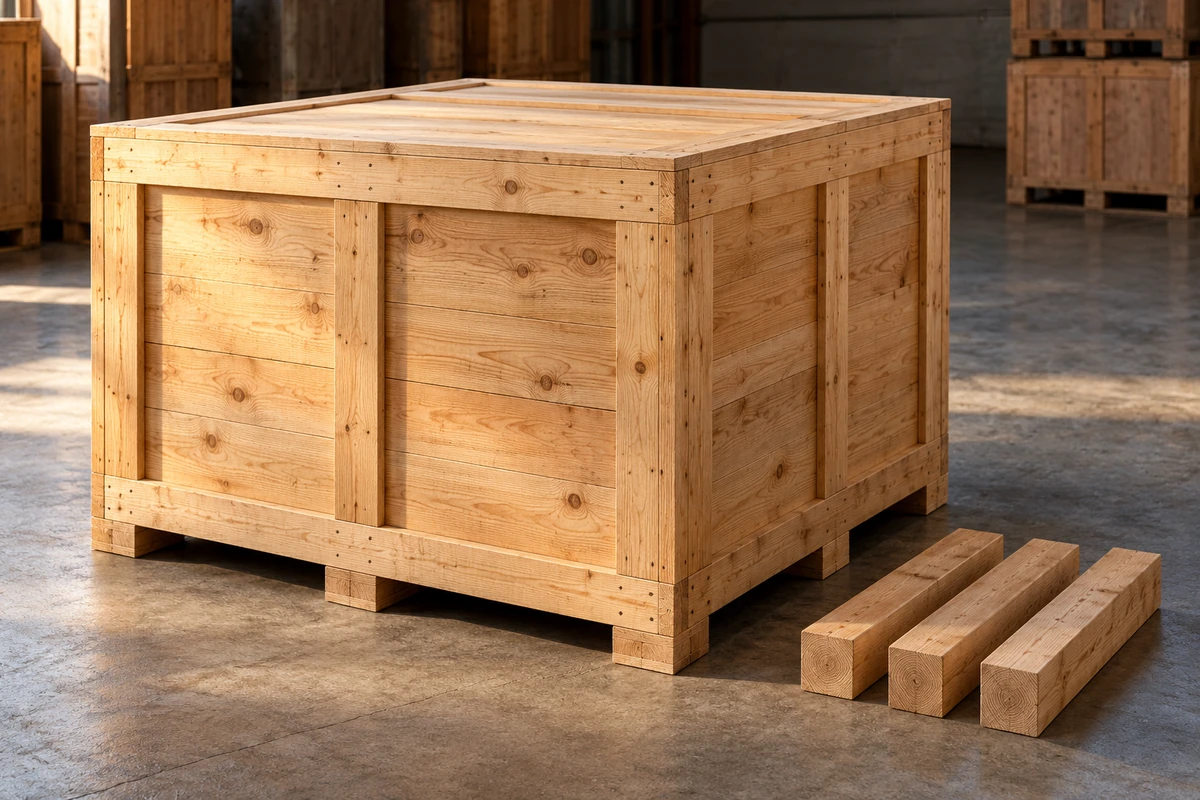
Before a CNC shipment leaves for the United States, connect the wood-packaging evidence to the actual crate, base and separately supplied dunnage. A supplier’s statement that the machine has an “export crate” leaves that connection unresolved. The importer needs a review of the materials that will travel, including anything added after the first packing photographs.
This is a pre-dispatch purchasing check for US entry or transit. It does not approve crate strength, certify a treatment mark or establish that the machine itself is admissible. No actual shipment has been assessed. The method below helps the buyer ask the importer, packaging provider and customs representative a specific question before committing to movement.
Identify the material behind the crate description
Start with the machine and package references already used in the order. Ask the packer to identify the crate panels, structural base, skids, support pieces and any separate dunnage in its proposed supply. Retain the provider’s material descriptions rather than identifying wood types from photographs. A description limited to the outside panels can leave the base and loose pieces unexplained.
USDA APHIS includes crates, skids and dunnage in its wood-packaging import guidance and directs importers to the Agricultural Commodity Import Requirements database. It also lists alternatives such as plywood and pressboard as outside its WPM regulation. Those distinctions require a material-specific review; they do not make an entire mixed-material crate exempt because its lid is plywood. APHIS wood-packaging import guidance
Ask the importer or its representative to record the applicable requirement for each relevant material and the source used. If the packer cannot identify a component, leave its status unresolved. The commercial decision is whether that gap must be closed before the buyer authorizes dispatch, rather than whether a photograph looks reassuring.
Connect evidence to the provider and the packed order
Create a short evidence index with the package identifier, material or component, supplier, supporting record and reviewer. Request existing provider records and safely obtained photographs that show which package they concern. A photograph cropped to one mark without package context can be difficult to connect to the lathe or router being purchased.
APHIS advises using accredited packaging providers and reviewing certification from the exporting country’s national plant protection organization. It explains that inspectors consider both the official mark and possible pest evidence. A supplier assurance or photograph therefore cannot independently guarantee entry. APHIS sourcing and inspection guidance
Keep the packaging provider distinct from the machine seller where they are different businesses. Ask who supplied the base and who supplied the final dunnage. If another warehouse adds material, ask it to identify that addition and provide its evidence. Do not attach an earlier provider’s statement to work it did not perform.
The buyer’s index is an editorial coordination tool, not an official certificate. It should direct a competent reviewer to original records, without redrawing a mark, rewriting a provider’s certificate or declaring the evidence authentic. Any discrepancy belongs back with the responsible provider and importer.
Review the final packing version
A CNC machine may move from a seller to an export packer and then to a consolidation warehouse. Ask which stage produced the evidence being reviewed. Record the final package count and packing-list revision so the review covers the version actually proposed for shipment.
Useful questions include:
- Does the evidence identify this crate and the machine order it contains?
- Are the base and additional support materials included in the provider’s description?
- Will another party introduce dunnage or replace a damaged package before loading?
- Who must be told if a material, provider or package reference changes?
- Which importer-side reviewer can close the remaining question?
These questions do not prescribe how to support or secure a machine. Packaging suitability, lifting access and protection of precision surfaces remain with qualified providers using the machine’s requirements. Removing necessary protection merely to simplify an evidence file is not a purchasing solution.
A fictional lathe crate with untraced dunnage
Imagine a used lathe identified as L-24 in a fictional order. Its seller supplies photographs of crate C-24 and a packaging-provider statement linked to that crate. The consolidation warehouse later reports that separate wooden dunnage will accompany the load. The seller replies that everything is covered because the original crate was approved. These labels and circumstances are invented for illustration.
The buyer’s evidence index keeps C-24’s records, but creates a separate unresolved entry for the added material. The next request asks the warehouse to identify the dunnage provider and material, then sends the response to the importer’s designated reviewer. No conclusion is made that the dunnage is compliant, noncompliant or exempt.
Suppose the warehouse provides attributable information and the reviewer confirms the applicable evidence is complete for the proposed materials. Record that bounded conclusion and the packing revision it covers. If the evidence remains missing, ask the buyer whether to hold dispatch while an authorized packaging proposal is resolved. Any changed pack must still meet its technical requirements.
The example’s outcome is a clear responsibility and decision, not a promised customs release. It also shows why repeating “ISPM 15 crate” on the freight quote does not answer a question about material introduced by another party.
Price the unresolved consequence without inventing a fee
Before approving movement, ask who pays for an agreed pre-dispatch correction, any booking change and any additional professional review. Request actual quotes where work is proposed. Keep unconfirmed amounts visible and identify which decision would trigger them.
Do not add a standard “wood inspection fee” or assume a supplier’s warranty covers every consequence. Compare the purchase, packing and transport scopes to see which party has actually accepted which cost. If an authority notice is issued later, preserve the notice and ask the importer to coordinate the response with the named officials. Do not turn a general article into instructions for treating, destroying or re-exporting the shipment.
Make the buying request specific
The practical handoff is a named US-bound shipment, a final material description, attributable provider evidence and an importer-side disposition. Keep the review date alongside the packing version; recheck the current requirements and any subsequent changes before dispatch.
Our role is an independent buying agent. We can organize supplier questions and request supporting records within an agreed scope. Import decisions and packaging or treatment work belong to the responsible authorities and qualified providers. See the mini metal lathe category for equipment-purchasing context.
Use the CNC quote form with a supported listing link, description or images. It accepts up to five PNG, JPEG, WebP or GIF images, at most 10 MiB each and 20 MiB total. Arrange certificates, PDFs and other technical documents through a separately authorized exchange; they are outside the image-upload field.
Frequently asked questions
Does a plywood lid make the whole CNC crate exempt?
Do not extend one panel’s material description to the complete pack. Have the importer review the base, support pieces and separate dunnage using attributable material information.
Can the buyer authenticate an ISPM 15 mark from a photograph?
A photograph can support attribution and a request for review. It does not give the buyer authority to certify a mark or guarantee acceptance of the shipment.
What if a warehouse adds wood after the crate is approved?
Record the added material and its provider separately, then ask the designated importer-side reviewer to assess the changed packing version before dispatch is approved.
Should a missing packaging record be priced as a standard inspection fee?
No standard fee is assumed. Identify the proposed professional action, its payer and an actual quote; keep any unresolved amount visible.
Sources
Discuss a sourcing request related to this article.Check US Wood-Packaging Evidence for the Final CNC Crate