
CNC runout reports: compare the actual measurement chain
Keep the spindle, holder, collet, artefact and reading location attached to a CNC runout result before comparing supplier evidence or replacement proposals.
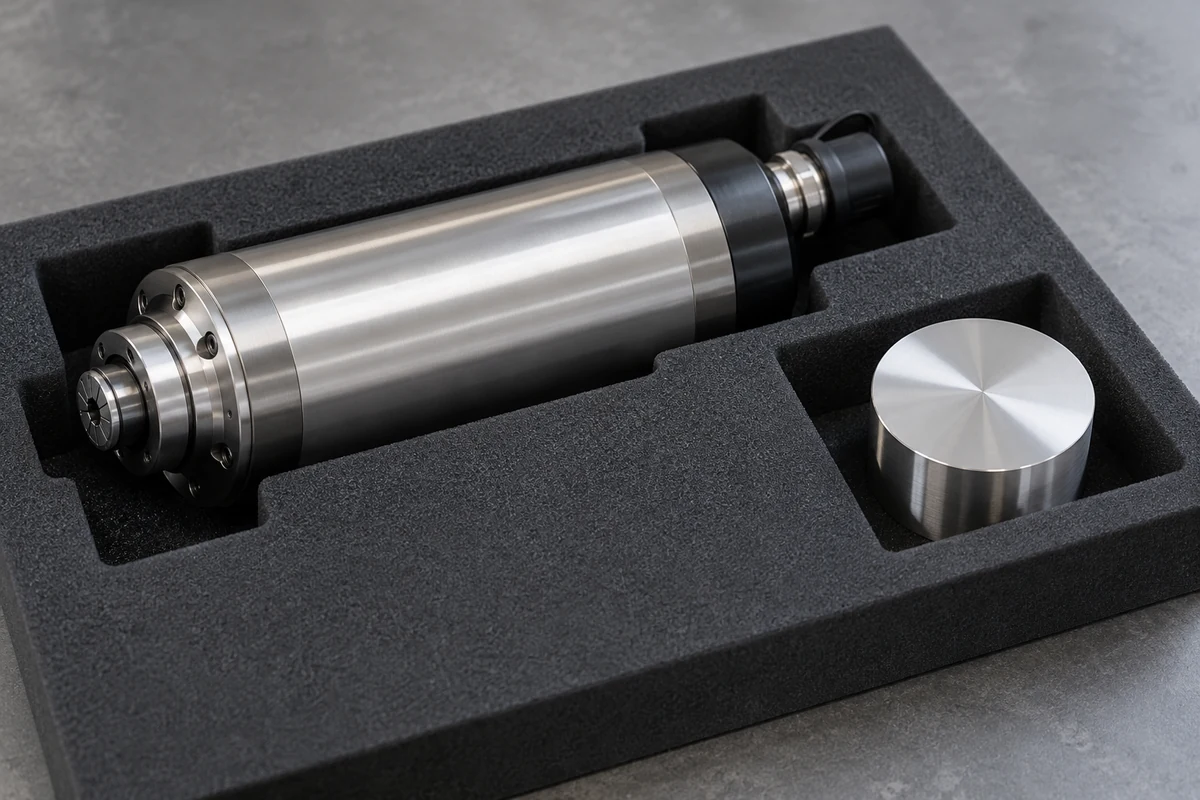
Equal runout numbers are comparable only when their measured objects, component chains, locations and conditions answer the same agreed requirement. A spindle-reference result and a held-tool result must remain separate.
Decide what the comparison permits before negotiating a remedy
A supplier may offer a replacement collet as soon as a buyer raises a runout concern. Keep that commercial offer separate from the explanation of the original result. Accepting a free component without recording the proposed assembly can leave the buyer unable to tell which combination was ultimately evaluated.
| Evidence state | Useful purchasing response | Decision still outside procurement |
|---|---|---|
| Same stated chain, location and method basis | Send both attributable reports for comparison | Technical acceptance against the agreed criterion |
| Component or location identity missing | Request a report addendum or state the limitation | Whether further measurement is needed |
| Supplier proposes a changed collet or holder | Record a separate replacement configuration and cost | Whether the changed assembly is suitable |
Ask who owns the cost of any agreed investigation, component return and further evidence, without claiming that the reported gap itself proves a defective part. Preserve the supplied quotation and any revised component identifiers so price negotiation cannot silently replace the original acceptance scope.
For a new machine, agree whether the order calls for spindle-only evidence or an identified supplied tooling assembly before paying for an extra report. For a received machine, retain the as-issued report and the author’s correction together. This decision table is an original document aid, not a diagnostic procedure or a way to calculate the contribution of individual components.
This is a report-review task. It provides no indicator setup, rotation instruction, tightening procedure or allowable runout. A competent provider must determine the appropriate method for the exact equipment. A buying agent can request and reconcile the evidence without operating or diagnosing the machine.
Read the noun attached to the number
Begin with the report’s exact wording: spindle taper, test bar, collet, tool shank or complete assembly. Preserve that wording in the buyer’s record. If the page says only “runout,” ask its author to identify the surface and assembly measured. Do not add “spindle” merely because the report arrived with a spindle quotation.
The Haas VF/VM maintenance manual distinguishes measurements at the spindle taper, on a precision test bar by its gauge-line reference, and farther along the bar. We use that manufacturer-specific distinction only to show that location and measured object are integral to a result. Its procedures and numerical limits are not transferred to an unnamed spindle. Haas VMC spindle taper maintenance.
For a real purchase, obtain the applicable manufacturer document and the provider’s approved method reference. Record whether the reported characteristic and unit match the agreed criterion. A copied value with its label, units or reference location cropped away is incomplete evidence, even if the supplier calls it a good result.
Describe the actual measurement chain
Draw a simple document map from the identified spindle to the surface reported. List only the components actually present: for example, spindle, holder, collet, held artefact. Some designs use a different chain. Have the provider describe that arrangement rather than forcing every report into the same assumed assembly.
Record each component’s usable identifier and whether it is supplied with the order, retained by the buyer or used only for testing. The test artefact needs its own identity and relevant record reference. A photograph can help identify the arrangement, but a picture alone should not be used to infer a hidden interface or the artefact’s metrological suitability.
REGO-FIX’s PG-L product page labels collet runout and total system runout separately. That is a useful example of a manufacturer distinguishing a component specification from a system specification. It is not evidence that a delivered spindle-and-tooling combination meets either claim, and it does not define what every supplier means by “system.” REGO-FIX PG-L features.
If the supplier submits a catalogue rather than a unit report, label it as manufacturer specification information. Ask what evidence connects the delivered combination to the requirement. Do not turn the presence of a genuine catalogue into a statement that the ordered assembly was measured.
Keep location, condition and result together
Ask the provider to state the measurement location using its defined reference. A distance without its origin is ambiguous: “from the nose” and “from the gauge line” should not be treated as interchangeable phrases without confirmation. If the report contains several locations, keep the results paired with their respective references.
Retain the method identifier, report date, unit identity, stated equipment condition and instrument or system reference. Where the approved plan distinguishes static and operating-state evidence, preserve that distinction. A report title should not be upgraded to a dynamic-performance claim when its recorded method does not establish one.
The buyer’s comparison can use these fields:
- Requirement: exact characteristic, reference and agreed criterion
- Chain: spindle plus the components actually included
- Artefact: identity, recorded condition and relevant evidence
- Location: measured surface, stated offset and reference origin
- Conditions: provider’s method and reported state
- Result: original value, unit and uncertainty or limitations where applicable
- Decision: responsible reviewer and precisely accepted scope
Keep absent information visible. “Not stated” is more useful than an assumed standard holder or a guessed distance. If the author corrects a reference, retain the original report and the correction so another reviewer can understand why the comparison changed.
Compare two fictional reports without merging them
Imagine order SP-12 requires evidence for the specified spindle with holder H-2, collet C-2 and the provider’s identified test artefact at the agreed reference location. Report A gives a result for the spindle taper. Report B gives the same numerical value for a held artefact but omits its distance from the reference and the collet identity. All identifiers and circumstances are invented; no value or acceptable tolerance is proposed.
A belongs in a spindle-reference row. It may be useful to the qualified reviewer, but it does not document the complete assembly required by SP-12. B appears closer to that scope, yet its missing location and collet identity prevent a reliable match. The equal numbers do not make A and B interchangeable or establish that both meet the order.
Request B’s existing configuration record and location definition. Suppose the provider identifies a different collet, C-7, used during the test. Record the result against C-7. Ask the authorized reviewer whether additional evidence is required for the ordered C-2 combination. Do not change the report label, silently substitute C-7 in the order or conclude that the difference must be harmless.
Suppose instead the missing information confirms H-2 and C-2 at the correct location. The identity gap is now closed, and the report can proceed to technical review against the agreed criterion. Documentary completeness still does not itself supply the reviewer’s acceptance decision.
Do not diagnose a component from an incomplete assembly result
A reported assembly result is not, by itself, an attributable fault finding against one item in that chain. Ask a qualified service provider to investigate a discrepancy using the applicable manufacturer methods. The buyer’s record should preserve what was measured and what was concluded by that provider, rather than guessing which bearing, collet or surface caused it.
Separate any proposed replacement from the evidence decision. A seller’s offer to send a different collet may be a practical proposal, but it does not explain the existing result or prove that a revised assembly meets the requirement. The changed combination needs an identified review and whatever evidence the approved scope requires.
This article does not assess balancing, residual unbalance or surface-texture parameters. Keeping those subjects separate prevents a geometrical runout report from being used as a general tooling-performance certificate.
Ask for a reviewable correction
A bounded request identifies the exact report and asks the author to confirm the measured chain, artefact, location reference and test conditions, then provide the missing record or state the limitation. If new testing is needed, agree the scope and responsible competent personnel first. Never pressure a receiving contact to improvise a rotating or exposed-tool check.
As an independent buying agent, we can organize those supplier responses within an agreed service scope. For broader purchasing context, see CNC router spindles. Start a CNC quote request with the product link, a description and available identification images.
AI-assisted editorial update, 26 October 2026. Sources and bilingual wording were checked with AI assistance; technical acceptance remains with the responsible provider.
Related purchasing decisions: Cutter and holder requirements.
Frequently asked questions
Can equal numbers be compared directly?
Only after their measured object, chain, location and conditions have been matched to the same requirement.
Does changing the collet explain the original report?
No. It creates a proposed new combination; preserve the original record and request the evidence needed for the changed assembly.
Who sets an acceptable runout limit?
The applicable product documentation and authorized technical acceptance scope, not this purchasing article or an unrelated machine manual.
Sources
Discuss a sourcing request related to this article.CNC runout reports: compare the actual measurement chain
Prepare a clearer buying request
Keep this page as context. Add what you know; review everything before sending. No purchase is made at this step.
Edit the checklist below before continuing. It stays a planning note; it does not approve a product or order.
- Evidence state
- Useful purchasing response
- Decision still outside procurement