
Shipping CNC Torque Motors by Air: Check the Actual Packed Configuration
Keep a torque motor or separate component linked to the package evidence and carrier response that support its air-freight quote.
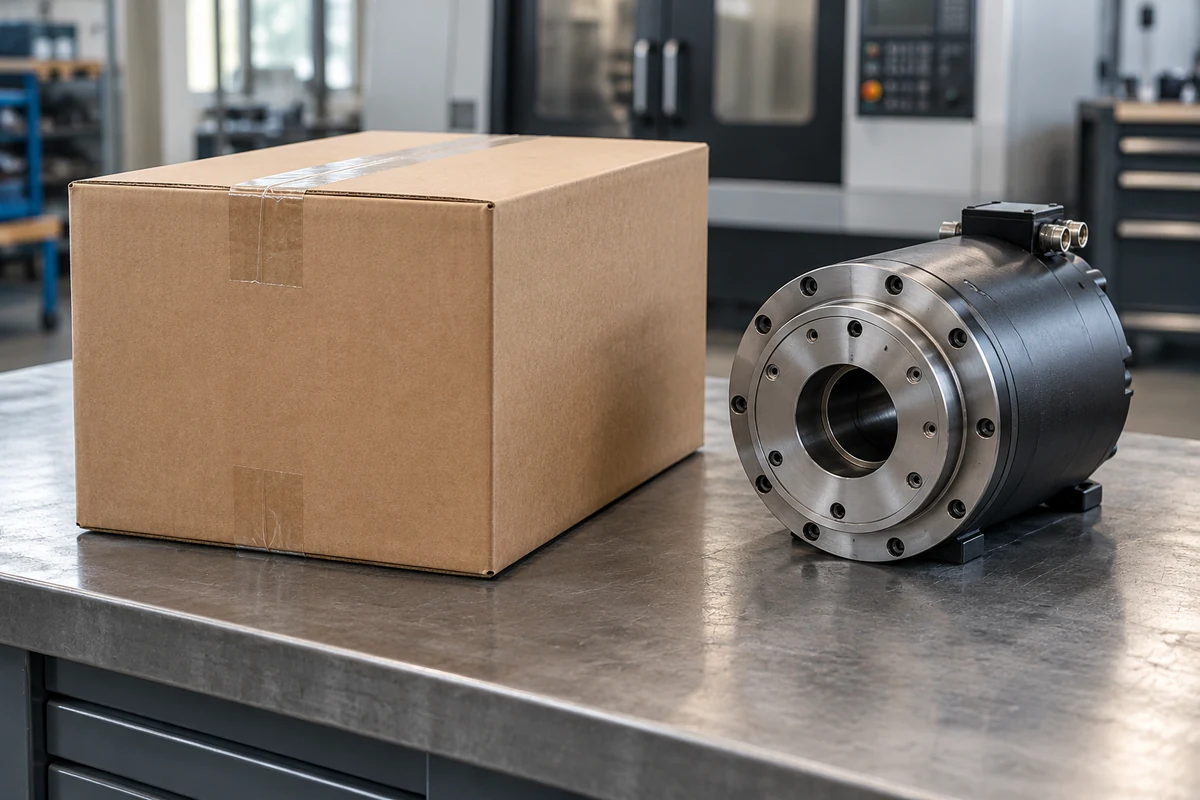
For CNC motor air shipping, approve the freight basis for the exact motor or component in its final package. An offer for a complete torque motor, a separate rotor and a repacked spare can describe different transport-review cases even when the seller calls all three “the same motor.”
The purchasing question is whether the quoted air service remains usable for what will actually be handed over. Motor selection, magnetic assessment and transport approval belong to their qualified providers. The buyer’s job is to keep those providers’ answers attached to the correct product and package.
Identify the shipped component, not just the machine application
Start with the full manufacturer and product reference, the supplier’s description of the supplied assembly, quantity and existing package identification. Ask explicitly whether the offer includes an assembled motor or separately supplied components. A rotary-axis description identifies the application but may leave the purchased object unclear.
Siemens’ current SIMOTICS T page distinguishes complete torque motors from T-1FW6 built-in motors supplied as stator and rotor components. It also identifies rotary-axis applications. This establishes why component scope matters in a CNC inquiry; it does not approve any shipment or establish that a particular seller supplies these products. Siemens SIMOTICS T
Keep the seller’s exact description alongside its supporting record. If an invoice says “motor” while the offer concerns a replacement rotor, resolve that discrepancy before seeking a firm freight response. Ask for clarification from existing documents and identification images; do not ask anyone to separate an assembly to make the description easier.
Establish what the packaging evidence actually covers
Request the manufacturer’s applicable transport information, its document revision and the package reference to which it applies. Distinguish an original manufacturer package from an original-looking box or a reused outer carton. A photograph can help identify a package; it cannot establish its internal configuration or magnetic transport status.
The Siemens 1FW6 external-rotor operating instructions, edition 12/2020, discuss air transport in relation to magnetic-field conditions and distinguish originally packed components. This remains a dated, model-specific example, not current rules for every permanent-magnet motor or permission to rely on any box bearing a maker’s name. Siemens manual, printed pages 51–54
Have the responsible specialist decide what current package-level evidence is needed for the actual product, origin, destination and service. Retain the specialist’s scope and any limitation. A document concerning a different component, package revision or shipment configuration should remain a mismatch until its applicability is explained by the responsible party.
The motor’s visible power or torque rating is not a substitute for that assessment. Nor should the buyer infer acceptance because a similar component previously arrived by air. Earlier transport may have involved another package or carrier arrangement.
Ask for acceptance and price against one configuration
Give the booking provider a named configuration: exact product scope, package reference, available maker evidence and the intended route. Ask whether its response is an estimate, a conditional offer or acceptance subject to identified requirements. Preserve that status in the purchasing comparison.
FedEx’s US guidance distinguishes service availability and conditional treatment of magnetized material. It does not establish a surcharge for every motor or acceptance on a China-origin route. Use the actual provider’s current response for the shipment, rather than transferring a US web example into the budget. FedEx shipping guidance
Request an attributable answer on any additional assessment, documentation or transport service the provider says is necessary, including who arranges it and who pays. Keep unquoted work unresolved. Do not add a generic magnetic-cargo fee, and do not assume that silence means the work is included.
If a provider cannot yet accept the described package, the estimate can remain a planning figure. It should not be presented as a bookable alternative beside another provider’s fully scoped offer.
Use a package-to-quote worksheet
Keep one row for each proposed shipped configuration, rather than one row for the motor family.
| Entry | What the buyer needs |
|---|---|
| Product scope | Exact motor or component reference and quantity |
| Supplied state | Assembled motor or identified separate components |
| Package identity | Actual manufacturer/current package reference and revision |
| Applicable evidence | Issuer, date and the configuration it covers |
| Assessment owner | Qualified provider and unresolved questions |
| Acceptance | Carrier/service, route, response reference and conditions |
| Cost basis | Included services, actual additions and unpriced dependencies |
| Change trigger | Product, package, quantity or route change needing a new response |
This is an editorial comparison aid, not a transport declaration. Its value is that the reader can trace the price back to the package actually reviewed.
A fictional smaller-box proposal
Imagine a fictional rotary-axis spare offered in its documented original package. The buyer obtains a conditional air quote using that package reference. A consolidator then proposes a smaller outer arrangement to reduce chargeable size.
The product code has not changed, but the quote’s supporting configuration has. The buyer asks the responsible specialist and booking provider whether their earlier evidence and response cover the proposed arrangement. The buyer does not design a replacement package or assume that a smaller box is either acceptable or prohibited.
If the revised configuration receives an attributable acceptance and a complete quote, compare it with the still-supported original-package option on the same route and service boundary. If assessment remains pending, label the smaller-box figure provisional. If the provider requires the original arrangement for its offer, that condition stays in the purchase decision.
No actual saving, acceptance or additional charge is assumed here. The decision is to preserve a usable quote, even when the proposed commercial saving is attractive.
Keep the agreed package linked to the release
Before authorizing the dependent purchase or collection, reconcile the final supplied scope with the package named in the provider’s response. Refer a later component substitution or repacking proposal back to that provider. Purchasing approval does not establish installation suitability or authorize physical motor preparation.
Our independent buying-agent role is to organize supplier information within an agreed scope. For application context, see CNC rotary-axis components. Start the CNC quote request with a supported listing link, description or existing identification images. The form accepts up to five PNG, JPEG, WebP or GIF images, limited to 10 MiB each and 20 MiB total. Arrange manuals and technical reports through a separately authorized exchange.
Frequently asked questions
Can a permanent-magnet CNC motor travel by air?
Ask the qualified transport provider about the exact motor or component, actual package and intended route. A product-family name does not determine the answer. Obtain its current acceptance status and required evidence before treating an air estimate as a usable purchase cost.
Does original motor packaging settle carrier acceptance?
Original-package evidence can be relevant, but it must cover the actual product and current supplied configuration. Have the responsible specialist and carrier confirm its applicability to the intended service. Do not generalize a dated manufacturer statement into automatic acceptance for every motor or reused box.
What changes if the supplier ships only the rotor?
The shipped product scope changes. Ask the supplier to identify the exact component and provide the applicable maker and package references. Have the provider review that configuration instead of carrying over an answer for an assembled motor, even if both offers serve the same rotary axis.
Can a smaller replacement box keep the earlier air quote?
Only the responsible provider can confirm that the changed proposal remains covered. Retain the earlier package basis, submit the revised configuration and ask for its acceptance and commercial response. Until that answer exists, keep the smaller-box price provisional rather than claiming a freight saving.
Sources
Discuss a sourcing request related to this article.Shipping CNC Torque Motors by Air: Check the Actual Packed Configuration