
Match CNC Belt Follow-Up Records to the Supplied Belt Family
A recycled retension line can describe a different belt family. Ask the provider to reconcile the exact installed belt, equipment instructions and any outstanding follow-up.
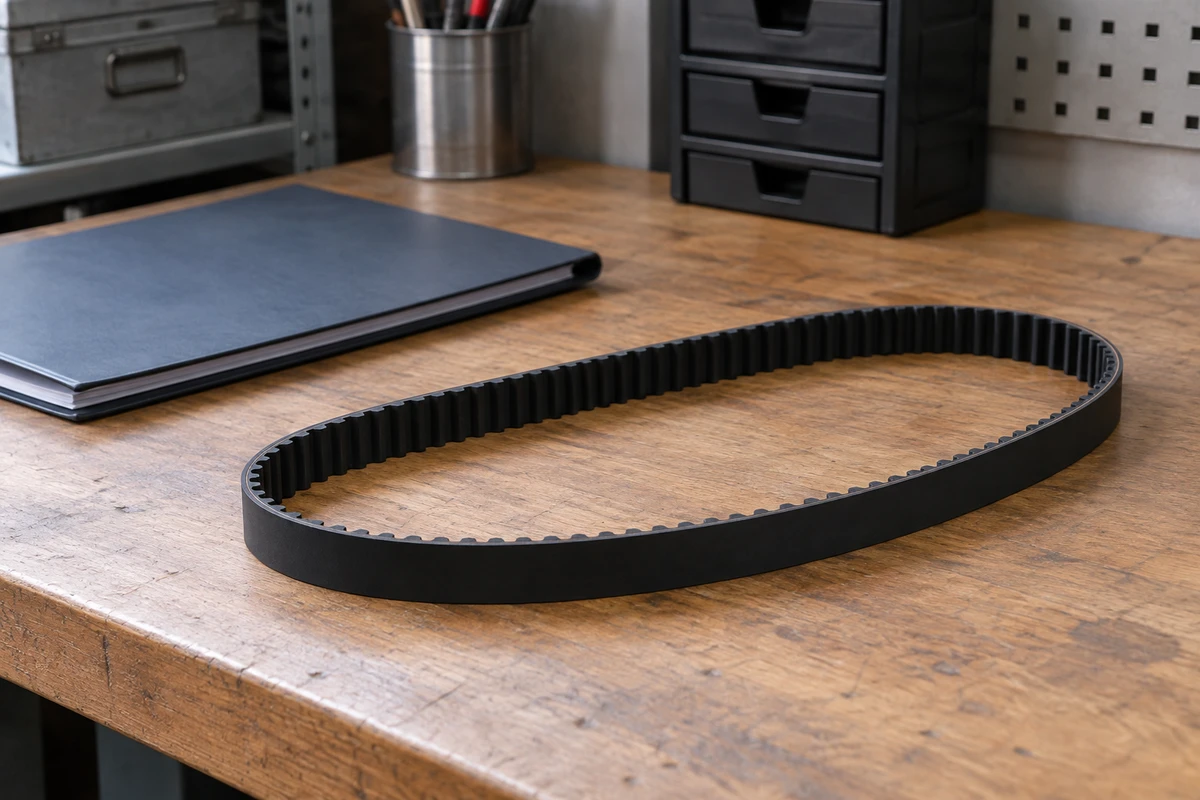
A CNC belt maintenance handover can contain a familiar follow-up task that belongs to the previous belt family rather than the installed replacement. Before treating that task as part of the receiving owner’s obligations, ask the qualified provider to reconcile it with the exact supplied belt and the equipment instructions.
The decision is whether the follow-up record is applicable and properly accounted for. It begins after the replacement part has been selected and installed under an authorized scope. It does not select belts, prescribe tension, diagnose wear or tell anyone to perform or cancel a maintenance activity.
Start with the installed part and its service event
Use the approved belt identity and the provider’s installation record. Ask for the maker, complete part designation, construction or family and the machine association. A service sheet headed only “drive belt” may be too broad to support its follow-up wording.
Keep the purchased part and installed part distinguishable if the record identifies a substitution. A corrected invoice is not a substitute for the responsible provider’s explanation of what was installed. If identification remains unresolved, record that dependency before attempting to classify the follow-up.
Also identify the service event the sheet describes. A form copied from an earlier replacement may retain an old machine reference or timing assumption. The buyer should ask its author which event the current entry covers rather than silently updating the heading and carrying the old task forward.
Do not transfer a follow-up rule between constructions
Gates’ preventive-maintenance manual distinguishes its V-belt run-in guidance from its synchronous-belt discussion, which states that further tensioning is not required in the documented installation context. It also names correctly installed Quad-Power 4 and Predator products as exceptions to the described V-belt run-in requirement. These are family-qualified distinctions; they are not one instruction for every CNC belt drive. Gates preventive-maintenance manual, printed pages 28–30
The useful purchasing implication is that an inherited task needs an exact-family basis. Neither “all belts need retensioning” nor “this construction needs no care” is an adequate handover conclusion. Ask the provider to explain the specific follow-up relevant to the installed product and machine.
Preserve named exceptions and their conditions where the provider relies on them. A seller’s abbreviated “service-free” label should not erase the conditions in the applicable documents or become a promise about the whole machine’s maintenance. The buyer’s record should state the provider’s bounded conclusion, not extend marketing shorthand.
Obtain the equipment-specific interpretation
Request both the applicable belt-maker reference and the relevant machine or equipment instruction. Have the qualified provider explain how it reconciles them for this installed drive. If the documents appear to disagree, keep the question open rather than choosing the more convenient wording.
Ask for the exact follow-up scope, the event or condition on which it depends and the party responsible under the agreed service arrangement. Keep the provider’s technical basis distinct from the commercial assignment. A task may be required while its executor has not yet been appointed; a contractor may also offer optional work that is not the same as a maker requirement.
Do not turn an unclear timing phrase into a new due date measured from delivery. The relevant event must be the one the provider identifies and can support. If the event history is incomplete, state that limitation and request the qualified next-action basis.
Separate installed supply from completed follow-up
An installation record can establish that an identified belt was supplied and fitted within the provider’s stated scope. It does not automatically account for every later obligation described in the service package. Request evidence for any follow-up the provider says was completed, with its actual scope and date.
For work still pending, retain the agreed dependency, authorized owner and required completion record. The buyer’s coordinator can track the response without becoming the person who interprets or performs the task. An appointment confirms an arrangement; it should not be entered as completed work.
If the provider determines that a copied task is inapplicable, obtain the corrected record and the reason. Do not instruct an operator to disregard the sheet on the strength of this editorial comparison. The correction needs to come from the responsible party for the actual equipment.
Resolve a fictional recycled service sheet
Imagine a fictional replacement record identifying a synchronous belt, accompanied by a follow-up line copied from a documented V-belt service context. The sheet says nothing about the current belt family or the equipment-specific basis for the task.
The buyer asks the service provider to reconcile the mismatch. It supplies the existing part reference and the two document identities, then requests an attributable applicability decision. The task remains unresolved in the handover while that answer is pending; procurement neither executes it nor cancels it.
Suppose the provider issues a corrected follow-up record explaining which obligations apply to the installed drive. The buyer links that correction to the original sheet and retains any completed-work evidence and open assignment at their actual scopes. It does not describe the belt or machine as maintenance-free.
Alternatively, the provider may confirm that the equipment has a relevant requirement beyond the general belt-family statement. Preserve that explanation with its supporting source. The discrepancy was a reason to ask a precise question, not evidence that the copied sheet had to be wrong in every respect.
Carry the family-specific basis forward
The final handover should connect the installed part, installation event, applicable sources, provider interpretation and the status of the agreed follow-up. A later family substitution reopens those associations even when the machine name remains unchanged.
Keep spare quantities, packing geometry and replacement selection in their own purchasing records. Here the useful result is an applicable post-installation obligation record, with performed and pending work clearly separated. It supplies no guard-access, tensioning or operating instructions and no technical release.
Buyer document-review worksheet
This original worksheet organizes the provider’s evidence. It is not a manufacturer form or a technical work instruction. Keep the original source reference beside each answer.
| Field | Answer to obtain |
|---|---|
| Belt part and construction/family | Exact installed product, not a generic drive-belt description |
| Machine and installation event | Machine association and attributable work event |
| Applicable belt and equipment sources | Relevant references with their scope and conditions |
| Provider applicability decision | Reconciliation for this installed drive |
| Agreed follow-up scope | Actual authorized task or non-applicability explanation |
| Performed-work record or open dependency | Evidence of the identified work, or its unresolved prerequisite |
| Next authorized owner | Confirmed responsibility and the record needed for closure |
Bring the precise gap into the inquiry
For broader product context, see CNC wear parts. As an independent buying agent, we can coordinate supplier questions within an agreed purchasing scope. Specialist work, its availability and its approval require the responsible qualified provider.
Start a CNC quote request with a supported listing link, description or permitted product images. Arrange manuals, drawings, data files and service records through a separately authorized exchange; the form’s image field is not a technical-file upload channel.
Frequently asked questions
Should every CNC belt handover include a retension task?
Do not impose a generic task. Ask the qualified provider to identify the exact installed family and reconcile the belt-maker and machine instructions for the actual service event.
Does a synchronous-belt statement mean the machine needs no maintenance?
No such conclusion follows from this article. Keep any statement about a particular follow-up within its product and installation scope, and retain the equipment provider’s separate care requirements.
What should a buyer do with a service sheet copied from another belt family?
Request an attributable applicability decision and a corrected record where needed. Keep the discrepancy visible until the responsible provider resolves it; the editorial comparison does not authorize performing or cancelling the task.
Can delivery day become the start of the follow-up period?
Only a provider-supported scheduling basis can establish the relevant event. Shipment or receipt is not evidence of installation or service, and a missing event date should remain unknown until resolved.
Sources
Discuss a sourcing request related to this article.Match CNC Belt Follow-Up Records to the Supplied Belt Family