
Used CNC Shipping Insurance: Ask About Hidden Failure and Replacement Limits
Use the proposed policy and broker’s response to identify hidden-failure, used-part and matched-set exposure before budgeting cargo cover.
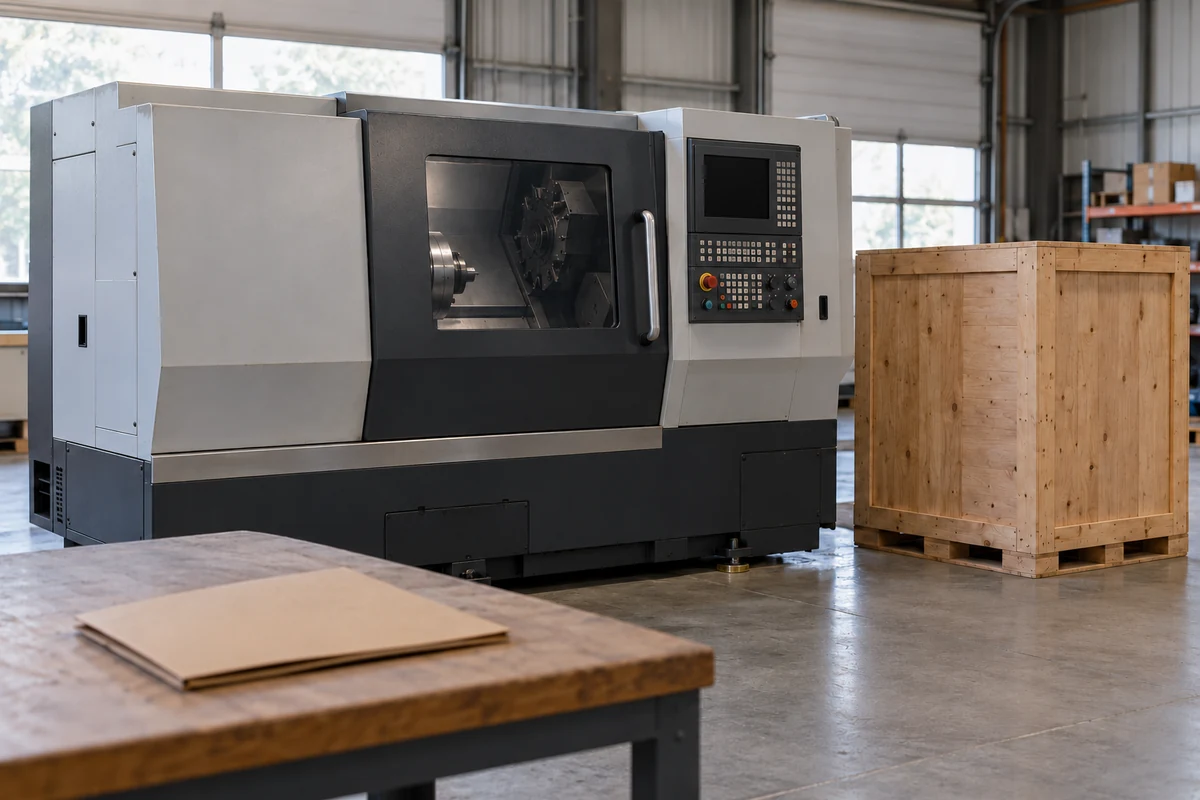
Before paying for used CNC machine shipping insurance, ask what the proposed policy would leave outside the buyer’s recovery. An insured value and premium do not explain the treatment of an internal failure, a damaged part of a used machine or one member of a matched set.
Use the exact proposed wording, schedule and endorsements with the insurer or broker. The questions below are a purchasing review, not insurance advice or a prediction of a claim. No actual machine, policy placement or loss has been assessed.
Identify the particular contract behind the freight line
Ask the person quoting cargo cover to name the insurer, policy wording and edition, schedule, applicable endorsements and proposed insured goods. Confirm which documents govern this shipment and obtain the responsible broker’s or insurer’s explanation of any differences from a public specimen.
Tie the description to the used machine’s actual identity and known condition. Distinguish the lathe or router itself from accessories, separately listed components and any machine-specific matched assemblies. If the quotation uses a broad description such as “machinery,” ask whether it accurately represents the proposed purchase.
QBE’s New Zealand Marine Cargo Policy MCA0425, effective 30 June 2025, says its wording and schedule should be read together. That particular policy is used here to show why the detailed terms matter. Its availability online does not establish that it is the buyer’s proposed cover. QBE New Zealand Marine Cargo Policy, printed page 4
Keep the actual policy response alongside the freight quotation. A logistics contact’s shorthand description of cover should not replace the insurer’s documents or an explanation from the responsible insurance professional.
Ask about internal failure without external evidence
The same QBE wording includes a mechanical and electrical derangement clause excluding loss or damage caused by electronic, electrical or mechanical failure where there is no external visible evidence of damage from an insured event. This is a specific exclusion in this particular policy, not a statement about every cargo policy. QBE MCA0425, printed page 9
For the actual proposal, ask the broker how its wording addresses a spindle, control or other internal problem discovered after delivery when the package appears intact. Ask which clause it relies on, what evidence would be needed and whether any endorsement changes the answer. Preserve uncertainty rather than turning an informal reassurance into a coverage promise.
Keep the observation, cause and insurance response separate. “Fault identified after arrival” gives a chronology. It does not prove when the fault arose or that transport caused it. Existing wear, prior repair history and a qualified assessment may matter to the enquiry, but procurement should not diagnose the machine or decide the claim.
Ask the responsible professional about notification and examination requirements before a problem occurs. Any physical assessment belongs to qualified personnel under the applicable instructions and permissions. Do not run or dismantle a machine merely to produce insurance evidence.
Separate the cost of a replacement from the recovery basis
QBE MCA0425 also contains a second-hand-machinery clause limiting covered part repair or replacement to a proportion based on the machine’s insured value compared with a new machine, with specified forwarding and refitting treatment and an overall cap. Its pairs-and-sets clause limits recovery to the lost or destroyed member even if a matching replacement is unavailable. QBE MCA0425, printed page 9
Ask whether the buyer’s actual proposed policy has either mechanism and how its own wording applies. A quoted price for a new replacement assembly and the amount recoverable under insurance are different figures. Do not put the former into the budget as an expected payout.
For a machine with documented coordinated components, explain that relationship to the broker using existing manufacturer or technical records. Ask whether loss of one member creates an uninsured replacement gap under the proposed terms. Do not declare that every pair of rails, drive component or accessory is an insurance “set”; request interpretation of the actual arrangement.
If the answer depends on an endorsement or a revised schedule, obtain the issued or proposed document and its status. An unanswered request to broaden cover remains an unanswered request.
Keep a policy-question worksheet
| Question | Record to retain | Purchasing consequence |
|---|---|---|
| Which cover is proposed? | Insurer, wording version, schedule and endorsements | Establishes the documents being reviewed |
| What used condition is disclosed? | Unit-specific history and known limitations | Prevents a new-machine assumption |
| What about hidden failure? | Clause-specific broker or insurer answer | Shows an exclusion or unresolved evidence requirement |
| How are used parts valued? | Actual policy explanation | Separates repair cost from potential recovery |
| How are matched components treated? | Answer covering the documented arrangement | Identifies a possible replacement gap |
| Who authorizes examination? | Named claims contact and applicable process | Avoids an unsupported evidence plan |
| What remains uninsured or uncertain? | Explicit buyer decision | Keeps the purchase budget honest |
This is an original question sheet, not an application, declaration or coverage checklist. Its final row matters even if the freight quote offers a familiar label for the insurance. The buyer needs to understand the material exposure it is choosing to retain.
A fictional intact crate and spindle finding
Consider a fictional used lathe whose crate appears intact on delivery. A later qualified assessment identifies a spindle problem. Nothing in this example establishes transit damage, a valid claim or the terms of an actual policy.
Before buying, the purchaser could have put that scenario to the proposed broker: which provisions would be relevant, what causation evidence would be required, and how would used-part valuation affect the review? The useful answer is a reference to the actual documents and their limitations, not a promise that every later spindle problem will be paid.
Suppose the broker identifies an exclusion relevant to the scenario and a separate limit affecting replacement parts. The buyer should retain both points. Resolving the first question would not automatically remove the second, and increasing a stated insured value should not be assumed to change either clause without the insurer’s confirmation.
The buyer can then reconsider the purchase budget, ask about an available alternative proposal or leave the decision open. It should not select a policy from this example or invent an expected recovery. If a real problem later occurs, the responsible claims process and professional assessment determine the next steps.
Keep insurance review distinct from machine acceptance
A seller’s disclosed condition, the buyer’s commercial acceptance and the policy’s coverage each answer a different question. Preserve all three. An insurance response does not establish that the machine meets the purchase specification, and an accepted sale condition does not itself decide a later transport claim.
We act as an independent buying agent, not an insurance broker, loss assessor or machine examiner. We can organize supplier records within an agreed purchasing scope. See mini metal lathes for product context. Begin the CNC quote request with a supported listing link, description or identification images; arrange policy and service documents separately through an authorized exchange.
Frequently asked questions
Does cargo insurance cover a CNC failure with no visible transit damage?
The answer depends on the actual policy, endorsements, facts and evidence. Put that scenario to the responsible broker or insurer before purchase and request a clause-specific explanation. A problem discovered after delivery does not itself establish transport causation or coverage.
Does insuring the full machine value guarantee a new replacement part?
Do not assume it does. Ask the broker to explain the proposed policy’s treatment of repair or replacement for a used machine and any applicable limits. Keep a supplier’s replacement price separate from potential insurance recovery rather than using it as a promised payout.
If one matched component is damaged, is the entire set covered?
Ask how the actual policy treats the documented component arrangement and an unavailable matching replacement. Provide the relevant manufacturer or technical records. A purchasing description such as “set” does not by itself establish an insurance interpretation or entitlement to replace every member.
What should I do if the broker’s answer leaves an important gap?
Keep the gap explicit in the purchase budget and ask for clarification or a documented alternative proposal. Do not regard a request for different terms as an issued endorsement. The buyer must decide the purchase with its professional adviser; this article does not recommend a policy or resolve a claim.
Sources
Discuss a sourcing request related to this article.Used CNC Shipping Insurance: Ask About Hidden Failure and Replacement Limits