
Get Special-Cargo Acceptance for the Final CNC Shipping Envelope
Match the final packed CNC envelope and declared special-equipment configuration to the carrier acceptance before approving dispatch.
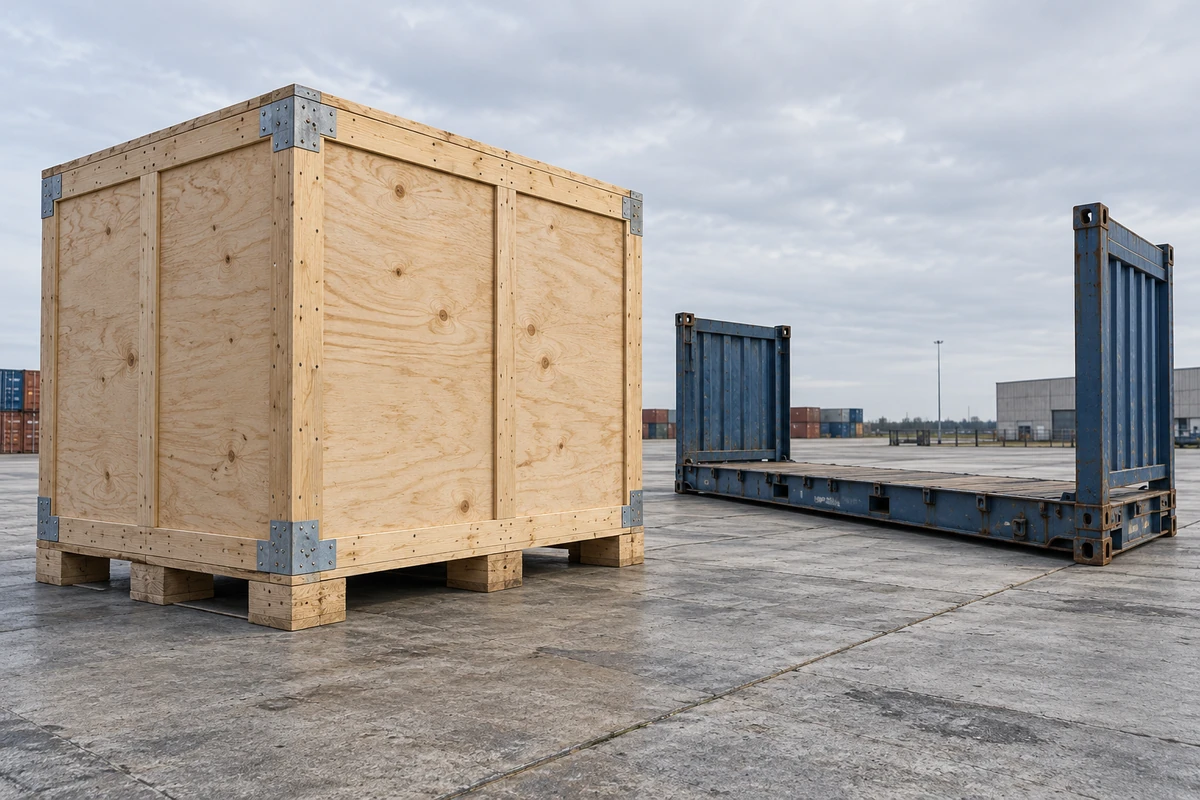
A carrier’s special-cargo acceptance should refer to the machine as it will actually be offered for transport. If the approved packing design changes the outer profile after quotation, obtain a new carrier response before treating the earlier booking as usable. The bare machine dimensions and the final shipping envelope answer different questions.
The buying decision is whether the accepted transport description still matches the completed proposal. This article does not choose a container, design a support, assess stability or give lifting or securing instructions.
Establish the profile the carrier accepted
Find the quotation and acceptance reference, then recover the drawing or shipment description used for that response. Record its revision, packed outside dimensions, stated weight, equipment type and any declared equipment configuration. If the provider priced a provisional profile, keep that qualification beside the offer.
For a CNC router, check whether the accepted description concerns the complete machine, a manufacturer-supported separated configuration or several handling units. The machine’s sales photograph may depict an assembled display unit rather than the proposed shipment. Do not let that photograph override the packing proposal or the supplier’s actual contents list.
Ask the booking contact to identify which information was reviewed and which remains conditional. A price returned against an enquiry is not necessarily final acceptance of the cargo. Retain the provider’s exact status instead of collapsing “quoted,” “under review” and “accepted” into one booking cell.
Include the outermost approved packing features
Ask the packing provider for the final external envelope it intends to present, including relevant external supports and securing-material projections. Use its attributable drawing and confirmation; do not instruct the buyer to measure or alter a heavy machine pack. Reconcile any difference between the drawing, the completed packing record and the description sent to the carrier.
Maersk’s special-cargo guidance identifies discrepancies involving dimensions, weight, flat-rack end-wall position and projections from securing materials or added packing. It warns that cargo differing from the quoted description can face cancellation or additional charges. These are carrier-specific published examples, not universal equipment limits or a tariff for this purchase. Maersk out-of-gauge cargo guidance
The practical purchasing inference is to declare the whole approved shipping profile. A support can be necessary for the packing provider’s design and still change the transport description. Resolving that difference means asking the carrier to reassess the actual proposal, rather than removing protection to preserve a cheaper quotation.
Compare revisions in the carrier’s terms
Give the booking contact a short change record that preserves both versions. Ask it to confirm whether the current proposal is accepted, requires a revised quotation or needs more information. Avoid describing a change as “minor” before the carrier has assessed it.
| Comparison field | Earlier accepted basis | Final proposal to reconcile |
|---|---|---|
| Machine configuration | Named assembly state | Same state or documented change |
| Packing revision | Drawing/reference used for quotation | Final provider-approved revision |
| Outside envelope | Declared profile and units | Full packed profile including projections |
| Weight description | Attributable value and scope | Current provider record with the same scope |
| Special equipment | Named type and declared state | Actual proposed type and state |
| Acceptance | Carrier reference and conditions | Written response covering the final revision |
| Commercial effect | Scope and validity of prior offer | Requote, unchanged scope or unresolved exposure |
Keep engineering approval and carrier acceptance as separate records. Neither substitutes for the other. The packing provider establishes its technical proposal; the carrier determines what it will accept for the booking and route.
A fictional external-support change
Imagine a fictional router assembly booked against a stated flat-rack profile. The packing provider’s final approved proposal adds an external support projection. The machine itself is unchanged and the supplier says the change should not matter because it is “only packing.”
The buyer should send the revised profile through the booking contact and ask whether the existing acceptance covers it. The issue is the actual presented envelope, not whether the addition is classified commercially as part of the machine or part of the packing. Retain the provider’s explanation of the change without turning it into a buyer instruction for removing the support.
Suppose the carrier requests a revised declaration and price. Compare the new offer against the same final packing revision and endpoints. Identify which additional services are actually quoted and which remain conditional. The earlier cheaper figure is no longer a complete alternative unless the carrier confirms a supported way to use it.
Another possible response is that the revised profile is acceptable on unchanged commercial terms. Save that answer with the final drawing. A third response may leave acceptance pending. Each outcome should be visible; none can be inferred from the buyer’s opinion that the dimensional difference looks small.
Control changes beyond the first ocean leg
Ask the arranging provider whether its acceptance covers the entire quoted route or only a named segment. A special-cargo profile may need separate responses from parties handling another segment. This is a scope question for the provider, not a claim that a particular route will reject the machine.
If the equipment type or route changes, ask which earlier conclusions still apply. Keep the final-mile handling and workshop-access plan with its responsible qualified provider. Carrier acceptance of the ocean profile does not establish that the machine can be unloaded or moved into the buyer’s premises.
Similarly, do not resolve a geometry problem by agreeing to a different as-shipped assembly state without its own approval. Separating an assembly can change destination responsibilities. Have the seller and authorized technical parties establish that proposal before seeking a new transport price for it.
Approve one identified transport proposal
The release record should name the final packing revision, the carrier’s response, any open conditions and the person authorized to decide the commercial change. Ask for an attributable answer on each unresolved condition before committing dependent collection arrangements.
There is no useful generic surcharge or dimensional tolerance to insert here. Request the actual carrier’s terms, quote validity and consequence of later changes. A blank cost entry means the effect is unknown, not included for free.
An independent buying agent can collect the supplier’s packing information and coordinate the buyer’s questions. Packing engineering, handling plans and transport acceptance belong to their responsible providers. See CNC router kits for the broader purchase scope.
Start the CNC quote request with a supported listing link, description or images. The form supports up to five PNG, JPEG, WebP or GIF images, at most 10 MiB each and 20 MiB total. Arrange drawings and other technical files through a separately authorized exchange; PDF, CAD and ZIP are outside its image upload field.
Frequently asked questions
Is the machine datasheet enough for a special-cargo booking?
It may not describe the final packing envelope. Ask the responsible provider to connect the final packed profile and equipment configuration to the carrier acceptance.
Can a small packing projection be ignored?
Do not decide that from its apparent size. Disclose the revised profile and obtain the actual carrier response; no universal tolerance is assumed.
Should protection be removed to keep the original freight price?
No purchasing decision should override the authorized packing design. Ask the packing provider and carrier to resolve a supported proposal and price its actual scope.
Does ocean acceptance cover workshop unloading?
Not by itself. Obtain the destination handling and access assessment from the responsible qualified provider and keep its scope separate.
Sources
Discuss a sourcing request related to this article.Get Special-Cargo Acceptance for the Final CNC Shipping Envelope