
Define What Returns with a CNC Cable-Chain Transport Rack
Resolve which rack modules return, which elements stay in the machine application, and what offer-specific release and commercial terms govern the return.
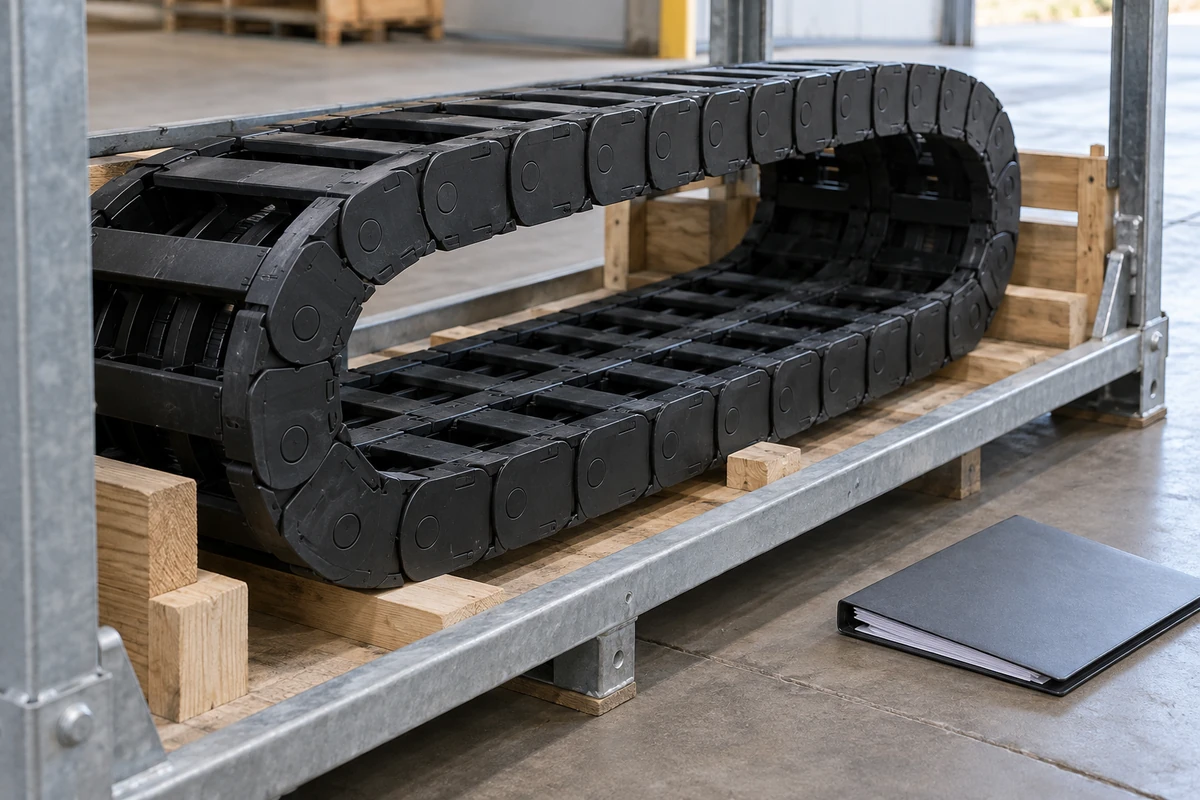
A CNC cable chain returnable rack can have two destinations after delivery: some provider-identified elements remain with the machine application, while other modules go back to the rack provider. Before accepting a return arrangement, establish which parts belong to each destination and what agreed event releases the returnable portion. “Return the rack after installation” is too broad if the word rack includes elements intended to stay.
This decision starts with an already selected pre-harnessed cable-chain assembly and an actual rack offer. It concerns the disposition of that transport and assembly carrier, rather than changes to the purchased machine’s assembly state. The lists and questions below are a purchasing review method, not instructions for removing or packing components.
First establish whether this rack is due back
Find the rack reference in the quotation and ask what commercial status the provider assigns to it. Is it sold with the assembly, supplied temporarily, covered by a stated return service, or still undefined? A photograph of a reusable carrier cannot answer that question. Neither can a general product page establish a return obligation for a particular buyer.
The current igus readychain rack page distinguishes standard, light, eco and p-rack variants for pre-harnessed systems. Identify the variant actually offered before relying on a description of another one. If no returnable rack is included, this specific return decision does not arise.
The CNC context is real but bounded: igus describes a readychain application for Hartford AERO portal machining centers. That application does not establish that Hartford used the newer eco-rack, or that the same arrangement is offered for a desktop router. Hartford application described by igus
Give the two destinations separate lists
In its July 2025 eco-rack announcement, igus describes rack modules returning for subsequent use while sheet-metal elements remain in the customer’s application. This is a specific example of why one delivered carrier need not have one final destination. It supplies no item-by-item return list for another order. igus eco-rack announcement
Ask the actual provider for two lists tied to its drawing or contents-list revision: returnable modules and application-retained elements. Use the provider’s descriptions and references. Do not assign a destination from an item’s material, appearance or position in a photograph.
Check how the return request refers to those lists. A collection request for “the complete rack” needs clarification if the same provider has identified application-retained elements. Conversely, a retained-element list does not explain whether all remaining modules are due back. An unclassified item should stay an open question rather than being silently assigned to either group.
Agree what releases the returnable portion
Destination membership answers what is due back. Release answers when the agreed portion may enter the return process and who communicates that decision. Ask the assembly provider and rack owner which event the offer uses, whether an attributable confirmation is required, and who sends it to the return coordinator.
Do not invent a mandatory completion certificate. The relevant event might be defined in the provider’s service scope; where it is absent, request agreement. Arrival at the buyer’s premises does not by itself settle installation completion or return readiness. A buyer’s purchasing approval also does not authorize physical dismantling.
Keep any deadline, return recipient, collection responsibility and charges connected to the same offer. Ask who bears return freight, whether any deposit or late-return term applies, and what the quoted service excludes. These are unresolved commercial questions until the provider answers; none is a standard term established by the manufacturer example.
Resolve a fictional mixed-destination list
Imagine a fictional order whose provider list assigns modules R1 and R2 to return, and elements A1 and A2 to remain in the machine application. These references are invented administrative examples, not manufacturer part numbers. A later collection message requests R1, R2, A1 and A2.
The return coordinator needs a corrected scope. Suppose the provider confirms that only R1 and R2 are due back and issues an amended list. That resolves destination membership, but the separately agreed release confirmation has not arrived. The record can accurately say “return contents agreed; release pending.” A correct list is not evidence that the release event occurred.
Now consider the reverse: the provider sends the agreed release message, but the collection request still includes A1 and A2. Release does not resolve the destination conflict. Ask the originating provider to reconcile the list before treating the return arrangement as ready. Neither situation calls for the buyer to infer a removal sequence or decide which installed element looks expendable.
Close one rack disposition record
Use a compact record for the exact offered arrangement:
- Assembly and rack: approved references, variant and quotation revision
- Commercial status: sold, temporary, stated return service or unresolved
- Destinations: provider-identified return modules and application-retained elements, with the applicable list or drawing revision
- Release: agreed event, confirmation author where required, evidence received or still pending
- Return scope: recipient, coordinator, quoted service, exclusions and any expressly agreed timing or charges
- Exceptions: unclassified or missing items, later changes and the provider responsible for each answer
- Buyer decision: exact arrangement accepted, declined or left unresolved
This record closes a disposition question only. Physical preparation and transport remain with the responsible providers under their applicable instructions. If the provider changes the rack variant or retained-element list, revisit the affected return scope instead of carrying the earlier decision forward automatically.
For broader purchase context, see CNC wear parts and CNC router kits. A CNC quote request can identify the offered assembly and the unresolved rack-return question without assuming that a return service is available.
Frequently asked questions
Is the cable-chain delivery rack included, loaned or due back?
Use the actual quotation and the provider’s identified rack variant to establish its status. A reusable design or manufacturer return-service example does not determine ownership or a return obligation for your order. Leave the status unresolved if the offer does not state it.
Which transport-rack elements stay on the CNC machine?
Use the actual provider’s application-retained list and its revision. The igus eco-rack example describes retained sheet-metal elements, but it is not an item list for another assembly. Ask the provider to classify any unclear entry rather than choosing a destination from its appearance.
Who confirms the rack is ready for return after installation?
Agree that responsibility with the assembly provider and rack owner as part of the offered service. Record the release event and any attributable confirmation the arrangement requires. There is no universal certificate specified here, and a delivery date alone does not settle return readiness.
Can a release message close a return request with the wrong contents?
No. Release and destination membership answer different questions. Have the provider reconcile the return list with the application-retained elements before treating the arrangement as ready. Conversely, a corrected list can resolve contents while the separately agreed release remains pending.
Sources
Discuss a sourcing request related to this article.Define What Returns with a CNC Cable-Chain Transport Rack