
Record the Lubricant Actually Present in Each Delivered CNC Component
Separate the manufacturer’s standard grease from the documented fill in each delivered component before arranging consumables or requesting a substitution review.
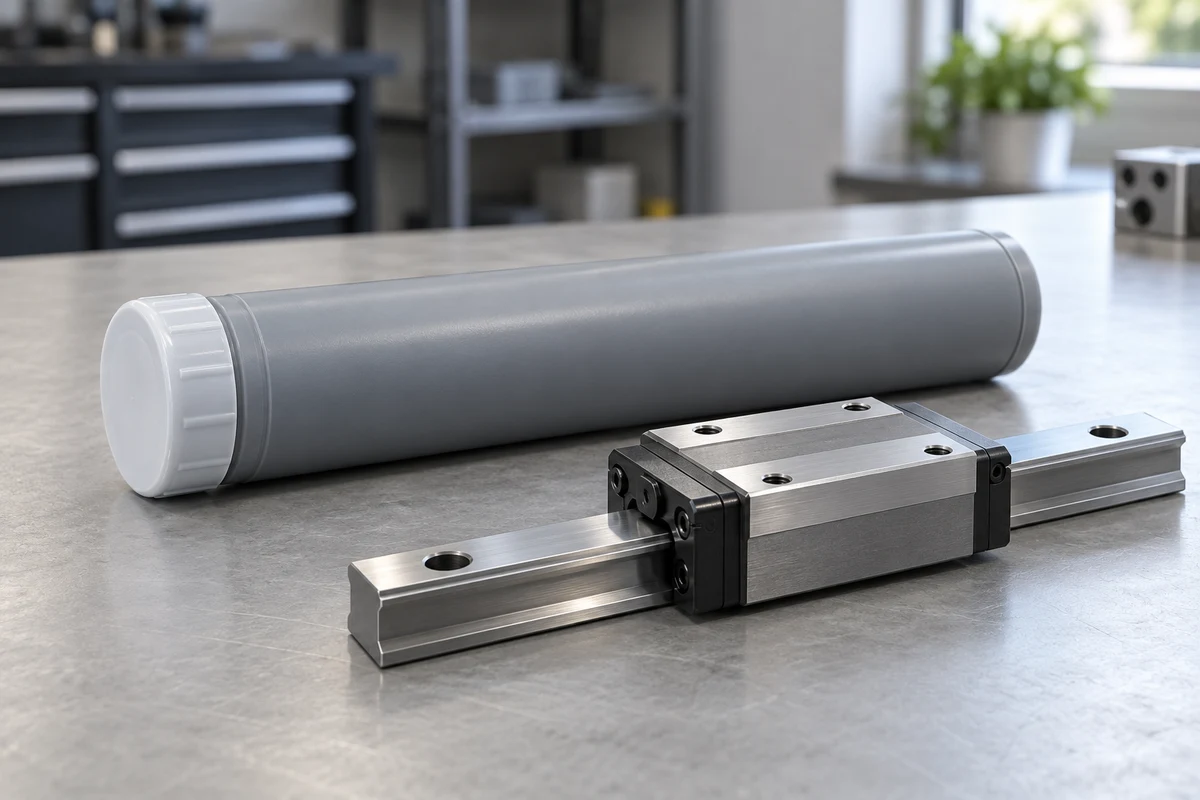
Before arranging grease for a delivered CNC assembly, establish which lubricant is documented inside each relevant component. A manufacturer’s standard-fill statement, a seller’s consumables recommendation and a service record answer different questions. Keep them separate until the records connect the actual component to the actual product.
The buying decision is whether the as-delivered lubricant identity is known well enough to request consumables or a product-specific substitution review. This is a documentary handover, with no instructions for applying, removing or replacing grease. No actual order or delivered-unit history was supplied for this article.
Give the component and the lubricant separate identities
Begin with the component manufacturer’s name and full model designation. Link it to the machine or assembly reference and order line. A support unit, ball nut and linear-guide block should not share one grease entry merely because they arrived on the same axis. Where a supplier’s records cover several components together, ask it to identify that coverage explicitly.
Then request the lubricant manufacturer, exact product name and any designation needed to distinguish the supplied variant. Preserve the name in its original language alongside a translation. A shortened phrase such as “bearing grease” leaves the product unresolved. A photograph of a labelled cartridge identifies the pictured cartridge; the provider still needs to explain its relationship to the component’s documented fill.
Use records and accessible identification already available. There is no need to open a component, expose its contents or perform a physical check to fill a purchasing worksheet. If existing records cannot establish the identity, record that limitation for the responsible technical provider.
Keep the factory default in its own field
THK’s support-unit FAQ identifies AFB-LF as the standard grease in THK support units. This is a useful, precisely bounded manufacturer reference. It does not identify the contents of another maker’s support unit or establish what remains inside a particular rebuilt or serviced THK unit. THK support-unit standard grease FAQ
Record that kind of statement as “manufacturer standard fill,” with its applicable product scope. Give “documented as-delivered fill” a separate entry supported by the supplier’s or service provider’s attributable record. If only the standard is known, the actual-fill entry remains unconfirmed. Repeating the same catalogue reference in both fields adds no evidence.
Ask whether the unit has a documented history that could affect the fill record. A rebuild entry, replacement component or reported service visit creates a question for the record owner. It does not tell the buyer which lubricant was used, and it should not be silently treated as proof that the original grease was retained.
Build a component-by-component identity worksheet
Use the following fields to keep the consumables question answerable. They are an original buyer’s document-review method, not a manufacturer maintenance schedule.
| Record field | Evidence to retain | Gap to make explicit |
|---|---|---|
| Exact component | Maker, full model, assembly reference and order line | Unidentified component or variant |
| Installed lubricant identity | Exact product and attributable fill or service record | Product name or connection to this component missing |
| Factory default versus actual fill | Separate source references for each | Default known, delivered contents unconfirmed |
| Delivery or service history | Dates and scope stated by the provider | Later intervention or incomplete history |
| Requested substitute | Proposed maker and full product designation | General description without an identified product |
| Manufacturer response | Covered component, both products and stated limits | Compatibility question still awaiting review |
Keep the source author and date beside each entry. “Supplier confirmed” is difficult to audit if the original reply cannot be found or names only the whole machine. Preserve a partial answer as partial: evidence for one support unit does not identify the fill in every guide block.
Follow the history without filling its gaps yourself
Read the available records in sequence. Identify the latest documented fill-related statement and ask whether later work changed the state it describes. A delivery date or invoice date should not become an invented lubrication date. Equally, an absent service record does not prove that no service occurred.
When records disagree, retain both references and ask the responsible provider to reconcile them. For example, a parts list may name the original product while a later service note names another. The useful question is which record describes the identified component at delivery, and what evidence supports that answer.
Use specific statuses such as “standard fill documented,” “service product reported,” or “actual fill unknown.” These labels help the buyer distinguish a purchasing lead from an established identity. They grant no permission to use a product or combine lubricants.
Ask about substitution with both products identified
THK warns that mixing different greases can produce unpredictable changes and prevent expected performance. That warning supports obtaining a product-specific response before treating an alternative as interchangeable. This article does not reproduce the page’s physical replacement guidance or extend its answer to an unnamed component. THK grease-substitution FAQ
A useful question gives the manufacturer or responsible qualified provider the exact component, documented existing lubricant, proposed alternative and available service history. Ask it to identify the scope and limits of its response. If the existing product is unknown, state that at the start; a comparison between two assumed products cannot resolve an unknown fill.
Do not turn grease color, a broad product class or a seller’s “equivalent” label into compatibility approval. Ask for an attributable response concerning the identified products and component. Keep the technical decision separate from availability, package size and price, which may affect purchasing after the suitability question is resolved.
Resolve a fictional rebuilt-support-unit handover
Imagine a fictional order containing a rebuilt support-unit assembly. The seller supplies a THK standard-fill reference but no record identifying the grease associated with the rebuild. It also offers an unbranded cartridge described as “the same grease.” No actual unit, service provider or compatibility finding is represented.
The worksheet can record the cited manufacturer default while leaving actual fill unknown. The cartridge is a proposed consumable with unresolved identity. Ask the seller for the rebuild provider’s record and the cartridge’s complete product designation; do not infer either answer from its color or proximity to the assembly in a photograph.
If an attributable service record later identifies the existing product, update that field and submit any proposed substitute for the relevant technical review. If the record remains unavailable, preserve the unknown and ask the qualified provider what evidence or separate service scope is needed. The buyer should not purchase on the assumption that the catalogue default settles the question.
Finish with an identifiable consumables request
The handover should connect each component to its documented fill, relevant history and unresolved alternative. It should leave maintenance responsibilities, transport preparation and operating readiness in their separate reviews. A complete identity record gives the manufacturer a clearer question; it is not a lubrication approval.
As an independent buying agent, we can organize supplier answers within an agreed purchasing scope. For product context, see CNC linear-motion components. Start a CNC quote request with a supported listing link, description or images. The form supports up to five PNG, JPEG, WebP or GIF images, at most 10 MiB each and 20 MiB total. Arrange service records, PDFs and other technical files through a separately authorized exchange.
Frequently asked questions
Does a manufacturer’s standard grease identify what is inside a rebuilt CNC component?
It identifies the documented factory default within its stated product scope. Obtain an attributable rebuild or service record for the particular component; keep actual fill unconfirmed if that history is missing.
What should a CNC lubricant identity record include?
Record the exact component, lubricant manufacturer and product designation, supporting fill or service record, relevant history, and any proposed substitute with its review status.
Can I choose replacement grease by its color or a seller’s “equivalent” label?
Neither supplies a product-specific compatibility decision. Identify both products and the component, then request the relevant manufacturer or qualified provider’s response. State clearly if the existing fill is unknown.
Does identifying the grease mean the component is ready to use?
No. The identity record supports a consumables or substitution inquiry. Application requirements, maintenance decisions and operating readiness remain separate technical responsibilities.
Sources
Discuss a sourcing request related to this article.Record the Lubricant Actually Present in Each Delivered CNC Component