
Check the Computer Evidence Supplied with a Software-Stepping CNC
Match a LinuxCNC software-stepping latency report to the delivered computer, software environment and reported conditions before qualified review.
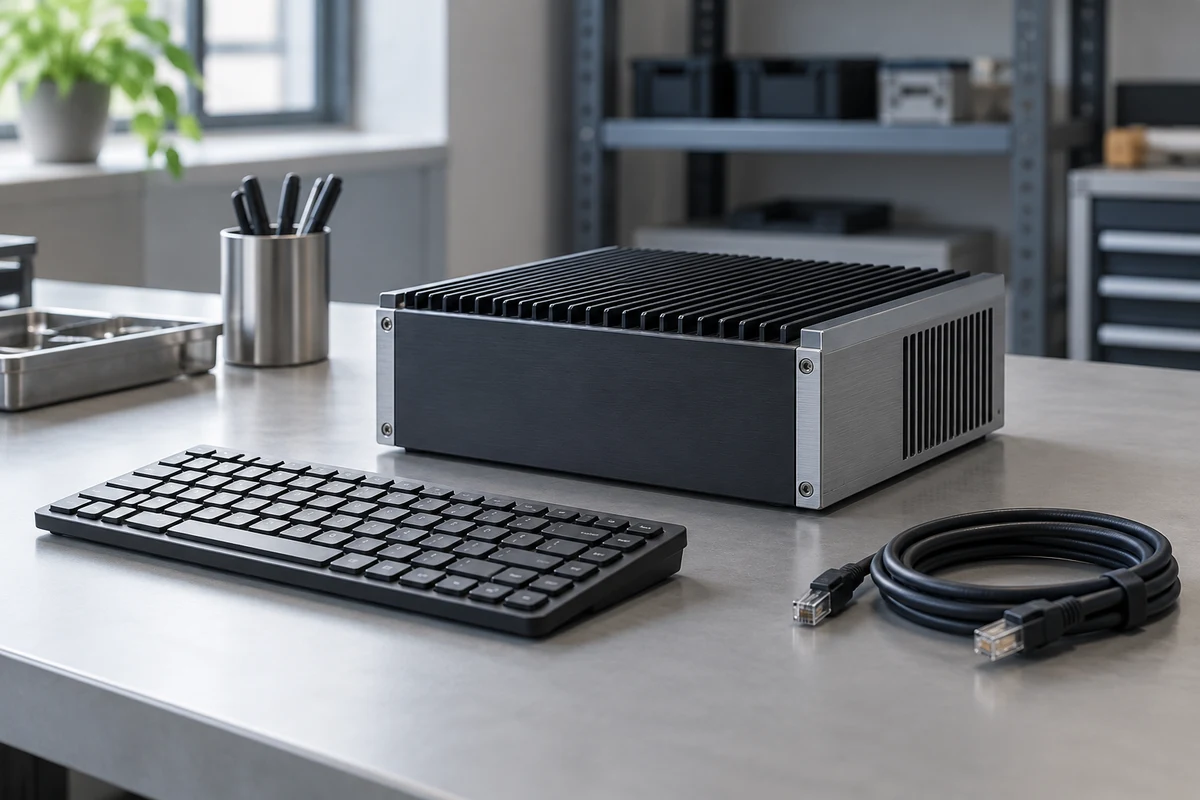
When a CNC supplier includes a computer for software step generation, ask whether the latency evidence describes that delivered computer and its documented software environment. A processor label or a report from the supplier’s usual desktop leaves that relationship unresolved. The useful handover connects the offered architecture, exact computer and attributable report before a qualified reviewer assesses its relevance.
This article addresses a narrow LinuxCNC software-stepping evidence question. It supplies no latency test procedure, configuration values, speed target or commissioning approval. No actual machine order, computer or latency report was supplied.
Confirm which architecture the evidence is meant to support
LinuxCNC 2.9’s StepConf documentation describes a configuration tool for a specific class of machine controlled through a standard parallel port using step-and-direction signals. Its latency discussion concerns the computer’s timing response in that context. This is not a description of every CNC controller or every LinuxCNC installation. LinuxCNC 2.9 Stepper Configuration Wizard, introduction and latency section
Ask the supplier to identify whether the delivered scope uses software step generation on the computer, and which documented control and interface arrangement it is supplying. Obtain that answer from the supplier’s configuration description and applicable documentation. A photograph of the computer’s connector panel is not enough to establish the control architecture.
If the architecture is different, ask the responsible technical owner which evidence applies instead. Keep that referral visible rather than transferring this article’s LinuxCNC 2.9 scope to an external pulse-generation device, a different control product or an unspecified machine. The buyer’s task is to obtain the right evidence for the offered system.
Identify the delivered computer beyond its CPU
In the same LinuxCNC 2.9 discussion, latency depends on factors beyond processor speed, including other computer hardware and system behavior. A higher CPU specification therefore does not settle the documented software-stepping latency question. Use this distinction to request an attributable report rather than to rank unnamed computers. LinuxCNC 2.9 latency background
Retain the computer maker, model, unit identifier where available and supplier’s configuration reference. Ask the provider to identify the hardware configuration associated with its report and the one to be delivered. If the machine quotation allows computer substitutions, ask how a changed unit will be documented and reviewed before the evidence is treated as applicable.
Link the software environment separately: the reported LinuxCNC version, operating-system and real-time environment references, and the provider’s identifiable configuration issue. These are record requests, not directions to inspect live settings or change software. Ask for existing provider records when the buyer cannot identify the environment independently.
Keep the report’s context attached to its result
Request the original report reference, author, date and the computer identity to which it applies. Preserve the provider’s exact metric labels and units. If a screenshot displays several results, ask which one the provider’s conclusion refers to; do not rename all figures “latency” or copy the smallest figure into a summary.
The LinuxCNC 2.9 page discusses workload and observation duration as context for its latency result. For a buyer, that means retaining what the provider reports about those conditions. This article prescribes no workload, duration or numerical acceptance limit, and asks the buyer to run no test. LinuxCNC 2.9 latency context
A screenshot can be useful evidence, but missing context should remain visible. Ask for the report’s stated workload, elapsed observation period, software environment and limitations through the report owner. A recorded observation should not be rewritten as an assurance about every future condition. The qualified reviewer decides what the documented scope establishes for the intended system.
Use a six-part evidence record
The following original buyer’s worksheet keeps attribution and assessment separate. It is not a test specification.
| Evidence field | What to retain | Question left open by a weak reply |
|---|---|---|
| Delivered computer identity | Maker, model, available unit identifier and configuration reference | Does the report describe the supplied computer? |
| Controller and stepping architecture | Supplier’s documented control and interface scope | Is this software-stepping evidence relevant? |
| Software environment | Reported versions and identifiable environment reference | Which software state produced the record? |
| Workload and duration | Provider’s stated conditions and observation period | What circumstances does the reported result cover? |
| Recorded latency evidence | Original report, exact metric labels, units, author and date | Can the summary be traced to the actual record? |
| Applicability and review | Differences, limitations and qualified review outcome | Who has assessed relevance to the delivered scope? |
Record missing identity separately from missing conditions. They need different answers: the supplier may be able to attribute an existing file, while its author must clarify the report’s scope. Collecting another screenshot does not necessarily resolve either issue.
Resolve a report for an earlier desktop
Consider a fictional supplier that includes a compact PC in its revised CNC offer but supplies a latency report for an earlier desktop. The seller says the compact PC has a newer processor and should be better. No actual brands, readings or performance results are represented.
Preserve the report as evidence about the computer it identifies. Record the delivered-PC mismatch and ask the supplier for an attributable record covering the offered configuration, or a qualified explanation of the evidence it proposes to rely on. A newer CPU label does not close the gap. The buyer should not re-title the earlier report with the new model name.
Suppose a second attachment identifies the compact PC but omits its software environment and observation context. The attribution question has improved, while the remaining scope questions stay open. Ask the provider for those details and send the completed record to the responsible qualified reviewer. This is an evidence request, not an instruction to conduct additional tests.
If the supplier cannot provide the agreed evidence, record the missing deliverable and ask the buyer and technical owner to resolve its effect on the purchase scope. A different computer or architecture is a proposed change requiring its own review; it should not be inserted into the order merely to make the paperwork appear complete.
Keep computer evidence separate from machine acceptance
A host-computer latency record addresses the reported timing behavior and conditions. It does not by itself establish axis positioning accuracy, a finished part’s dimensions, a permitted machining speed or the machine’s safety. Those claims need their own defined evidence and responsible decisions.
Keep receipt and assessment in separate fields. “Report received” means the document arrived. “Applicable to the delivered configuration” needs the relevant attribution and review. Any technical acceptance should quote the qualified review’s scope and conditions rather than turn a general “looks good” reply into a wider performance guarantee.
Retain the relationship if the supplied computer or software environment changes before delivery. Ask the responsible provider to identify the difference and the reviewer to assess its effect on earlier evidence. A previously accepted record should remain attributable to its original configuration.
As an independent buying agent, we can collect supplier records and coordinate the unresolved purchasing questions. See CNC controller sourcing, or start a CNC quote request with a supported listing link, description or images. The form allows up to five PNG, JPEG, WebP or GIF images, at most 10 MiB each and 20 MiB total. Reports, PDFs and other technical files need a separately authorized exchange.
Frequently asked questions
Does this latency-evidence checklist apply to every CNC controller?
No. Its technical background is the LinuxCNC 2.9 StepConf software-stepping context described in the article. Ask the technical owner which evidence applies when the delivered control architecture differs.
Does a newer or faster CPU settle software-stepping suitability?
No. LinuxCNC 2.9 explains that latency depends on more than CPU speed. Request evidence attributable to the delivered computer and documented environment, then obtain qualified review.
What is missing from a latency screenshot with no computer identity?
The buyer cannot connect it to the delivered unit. Request its original report reference, applicable computer and environment, exact metric labels and units, reported workload and duration, and stated limitations.
Does a satisfactory latency report prove machine accuracy or safety?
No. A latency record covers the reported computer timing behavior and conditions. Machine accuracy, permitted operating performance and safety require their own applicable evidence and responsible decisions.
Sources
Discuss a sourcing request related to this article.Check the Computer Evidence Supplied with a Software-Stepping CNC