
Reorder CNC Surfacing Inserts or a Complete Cutter?
Separate replacement inserts, cutter complements and retained bodies before comparing an insert-only offer with a complete surfacing tool.
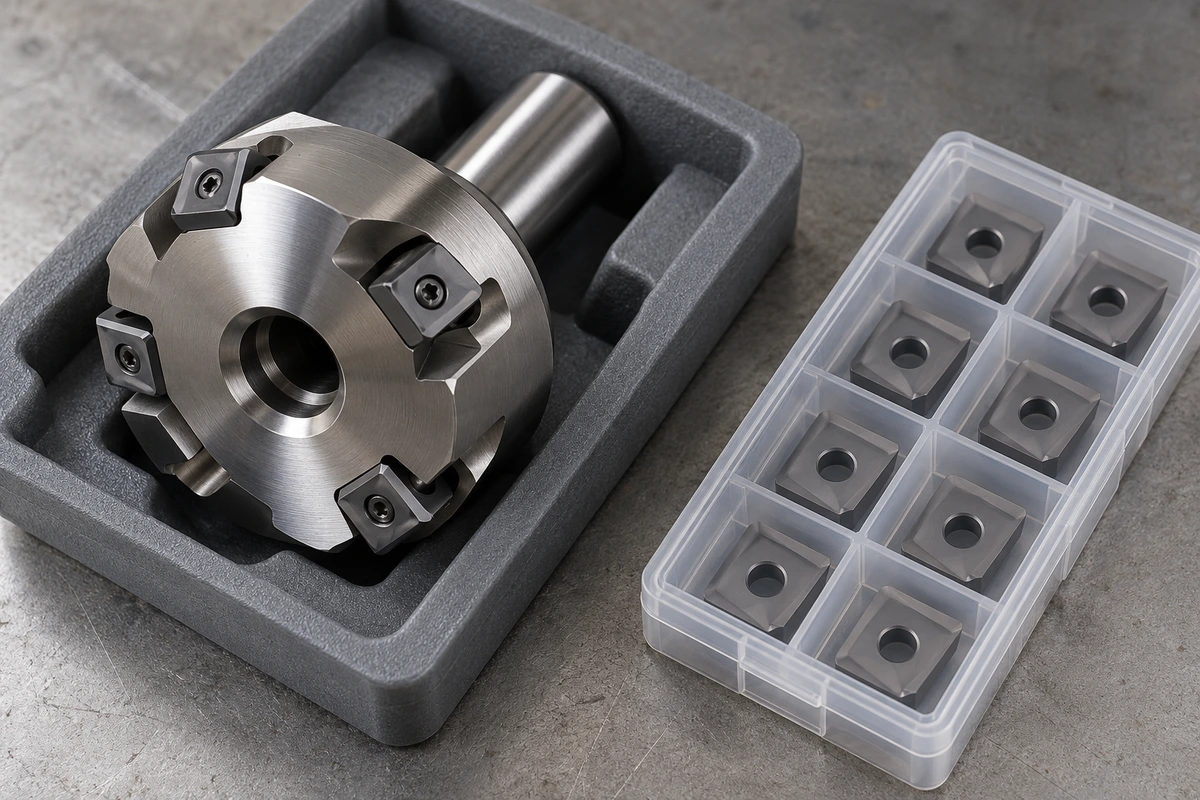
A CNC surfacing cutter with replaceable inserts has more than one purchasing unit. The body is one item, the inserts fitted to it form another requirement, and the seller may package those inserts in a different quantity again. Before repeating a complete-tool order, establish whether the approved replenishment need concerns inserts, separately required hardware or the whole cutter.
This comparison assumes the tooling owner has already identified the required supply and determined whether the existing body remains eligible for the intended use. It does not assess body condition or explain how to turn, fasten or replace an insert.
Separate the cutting material from the retained body
CMT describes its 663 CNC spoilboard-surfacing cutters as using four-sided carbide inserts. The page also distinguishes Z3 and Z4 cutting-edge configurations and identifies insert 790.120.03 and screw 990.075.00 against listed variants. We reviewed the manufacturer’s page on 13 October 2026.
Use that example to define the purchasing question, not to approve another brand’s insert or every cutter carrying a similar description. Obtain the complete existing cutter reference and the applicable replacement-part identity. Where the proposed insert differs, keep the alternative pending the required technical decision.
The retained body has an economic role only if its continued use is supported. An insert-only quote can look attractive because it omits the body, but that omission is valid only within the approved scope. Conversely, ordering another body by default can obscure the separate consumable supply that the existing tool was designed to use.
Keep four different counts distinct
Record complete cutter bodies, required inserts per applicable cutter complement, individual replacement inserts and the supplier’s insert selling unit. A request for “two sets” needs a definition before a seller can quote it accurately.
Four-sided insert design describes the insert’s available edge geometry. It does not mean that one purchased insert equals four physical inserts, that every cutter needs four inserts, or that tool life will be four times longer. Likewise, a Z designation should not be copied into the pack-quantity field.
Ask the tooling owner for the applicable complement requirement and the supplier for the number of inserts in the offered package. Keep those sources separate. A product photograph can show a cutter arrangement without establishing how many loose replacement inserts a seller includes in its price.
Obtain a scope-complete insert proposal
An insert-only offer should identify the exact replacement reference, selling unit and quantity. Have any separately required screws or other hardware shown explicitly. The presence of a screw reference in a manufacturer’s parts table does not establish that a loose-insert package contains screws.
Request any necessary qualified service as a separate defined scope. Compare the actual delivered insert supply and that service, where applicable, with the complete-tool alternative. Keep unquoted work open. The buying agent should not estimate a fastening task from a photograph or assume that every customer will perform it internally.
Check what the complete-tool quote contains as well. The word “cutter” should not leave the buyer guessing whether the offer includes the body, its insert complement and any other specified items. A more complete offer may address a different need, such as an approved additional tool, rather than replenish the same consumables.
A fictional two-complement request
Suppose a fictional workshop needs two replacement insert complements for already approved cutters. For this example only, the technical requirement specifies three inserts per complement, while the seller quotes packs of ten matching inserts. These numbers illustrate unit conversion and do not specify the complement of any named CMT variant.
The defined need is six inserts. One ten-insert pack would provide those six and leave four additional inserts, subject to the actual offer and approval. Ordering two individual inserts would leave the requirement incomplete; ordering two complete cutter bodies would purchase a different scope.
Now suppose the actual service proposal also requires identified screws not included in the insert pack. Add that defined hardware supply to the comparison. Do not label the four surplus inserts a solution to missing screws, and do not infer screw reuse from the fact that the body is retained.
The buyer can compare the delivered pack and separately scoped work with a fully specified complete-tool proposal. It should keep the four surplus inserts visible and avoid assigning a guaranteed future life or savings to them. If continued use of one body later becomes unresolved, reopen only the affected comparison rather than carrying forward an unsupported insert-only assumption.
Record the consumable purchase without predicting tool life
Keep the exact cutter reference, replacement insert identity, technical complement requirement, quoted selling unit and any separate hardware together. Store issues should distinguish an individual insert from a full complement so later replenishment does not multiply demand by the wrong unit.
Edge-use history may belong in the technical team’s records, but procurement should not turn the four-sided design into a fixed number of jobs, hours or guaranteed replacement events. The purchasing result is the right defined supply for an approved requirement. Cutter condition, cutting parameters and operational release remain separate.
Request the defined replacement supply
As an independent buying agent, we can organize supplier offers and purchasing questions within an agreed scope. Technical suitability and any physical preparation or service remain with the responsible qualified provider. See CNC cutters and inserts, then start a CNC quote request with the product link, description or existing identification images. Arrange technical documents through a separately authorized exchange.
Frequently asked questions
Does a four-sided insert provide four physical replacement inserts?
No. It is one physical insert with four-sided edge geometry. That design does not establish cutter complement size, pack quantity or a service-life multiplier.
What does a request for two cutter complements mean?
It means two complete insert requirements as defined for the applicable cutters. Obtain the actual inserts-per-complement requirement before converting it to the supplier selling unit.
Are screws automatically included with replacement inserts?
No. A parts-table screw reference does not establish pack inclusion. Have the current quote state any required hardware separately.
Is insert-only replenishment always cheaper than a whole cutter?
No universal result follows. Compare actual scope-complete offers, with continued use of the retained body supported and any service or hardware costs visible.
Sources
Discuss a sourcing request related to this article.Reorder CNC Surfacing Inserts or a Complete Cutter?