
Check Toolpost and Holder Height Before Buying a Set
Check the machine mounting interface, holder geometry and documented tool-position range before buying a quick-change lathe set.
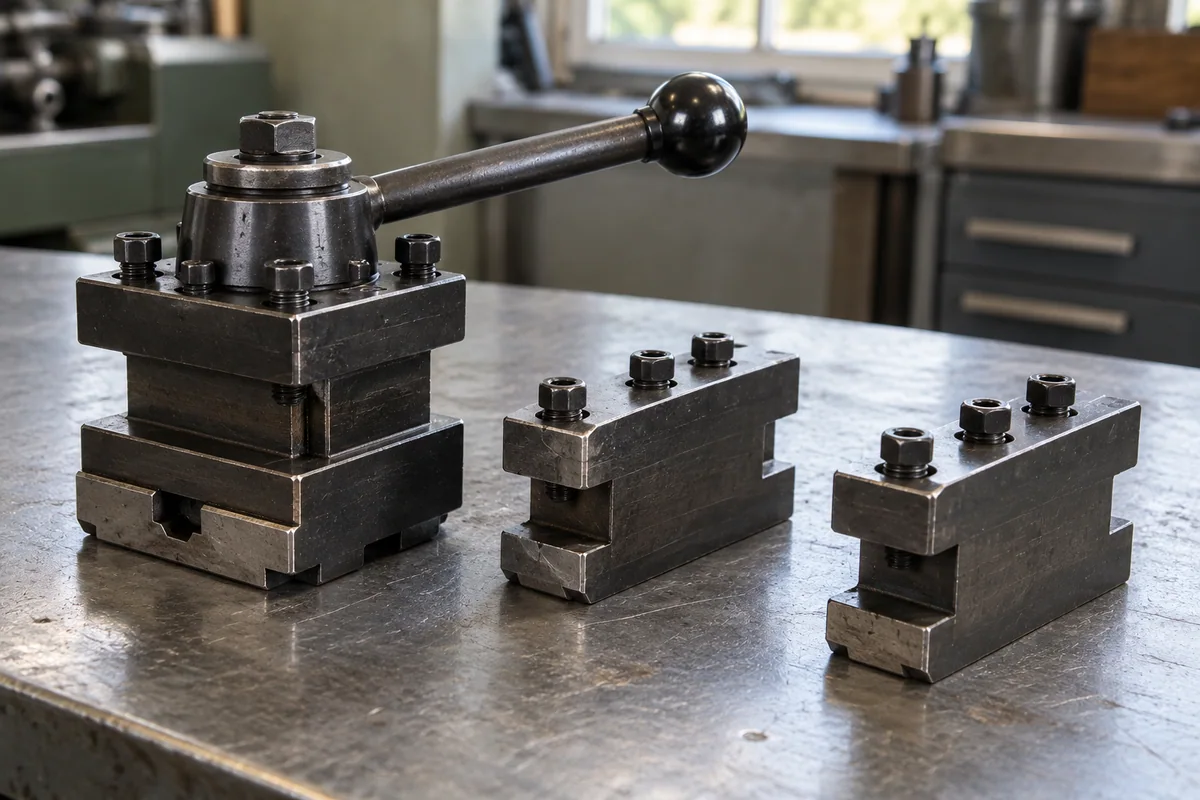
A quick-change toolpost set can be described as “for mini lathes” while leaving two purchase questions unanswered: how it mounts to the specific machine, and whether each proposed holder can place the intended tool at the required position. Request evidence for both before accepting a set based on its series name, tool capacity or photograph.
The useful outcome is a documented machine–post–holder–tool combination. This is a dimensional procurement review, not an installation procedure. It does not prescribe shims, machining of the compound, tool-setting methods or a universal centre-height tolerance.
Start at the actual mounting surface
Identify the lathe model, revision and current compound or cross-slide arrangement. Ask for the machine drawing that locates the toolpost mounting surface and its connection features. If the machine is used or modified, identify the fitted arrangement rather than relying solely on the original catalogue.
Describe the proposed connection in manufacturer terms: mounting stud or bolt, thread specification where relevant, base features, T-slot or other mounting geometry, and included hardware. A seller’s “mounting bolt supplied” statement does not answer whether the supplied connection matches this machine. Request the exact drawing or a written manufacturer response addressing the defined interface.
Keep an unfinished component distinguishable from a ready-to-install item. Aloris’s DA toolpost page, for example, asks buyers for T-nut dimensions and states that the T-nut otherwise ships blank. That is evidence of an order-specific mounting detail in that product family, not a recommendation to buy a DA post for a mini lathe or permission to modify any machine. Aloris DA T-nut ordering information.
If a seller proposes custom work, ask it to identify the deliverable and drawing that would be approved. Do not allow “some adjustment required” to conceal an undefined modification or leave the buyer responsible for solving a mounting problem after receipt.
Name the height reference before comparing numbers
A quoted “centre height” needs a stated reference. A machine catalogue and a holder drawing can measure from different surfaces. Ask the supplier to identify the machine reference surface, spindle-axis location relative to that surface, and the holder/tool references used in its proposed comparison.
Avoid combining a machine’s headline swing figure with a toolpost’s body height and calling the result a fit check. The purchase question concerns the assembled combination at the documented mounting location. Ask the manufacturer or competent reviewer to show that comparison explicitly, using consistent units and the intended tool geometry.
Record the tool shank section and exact tool identification where known. For an insert tool, the shank description alone may not provide the complete cutting-point location needed for review; request the applicable tool drawing. The purchasing team should transmit that geometry rather than infer it from a photograph or another tool in the same size family.
Separate holder capacity from positioning range
A holder’s capacity tells the buyer which tool sizes the manufacturer describes for that holder. It should not be recorded as the available height-adjustment range. Aloris’s miniature MA page lists tool capacity, toolpost dimensions and the availability of holder height adjustment separately. That narrow example supports asking separate questions; it does not supply the adjustment limits or prove fit on a particular buyer’s machine. Aloris miniature MA product information.
Request the applicable adjustment limits and any conditions from the manufacturer for each proposed holder. Where the answer depends on the installed tool, have the reviewer identify that tool in the response. An unqualified “adjustable” leaves the key purchase question open.
Make a row for each holder style the buyer actually needs. Turning, boring and other holders in a set should not inherit a fit decision from one reviewed example. Ask what the set includes, which tool interface each holder provides and whether the reviewed holder is the exact part number supplied.
| Interface or position | Required input | Seller’s useful response |
|---|---|---|
| Machine to post | Current mounting arrangement and drawing | Supplied base and fastener identities, with a documented interface comparison |
| Machine height reference | Named mounting datum and spindle-axis reference | Same reference used in the proposed assembly review |
| Post to holder | Post and holder manufacturer/part numbers | Documented combination and relevant geometry |
| Holder to tool | Tool drawing, shank section and intended holder | Capacity plus applicable position/adjustment information |
| Surrounding space | Relevant machine and accessory geometry | Identified interference questions and reviewer conclusion |
| Supply condition | Standard, unfinished or custom components | Explicit deliverable, included work and approval dependency |
A fictional set that passes no height decision yet
Suppose a buyer requests a quick-change set for a fictional bench lathe, L-7. Offer A says “mini-lathe compatible,” lists a tool-shank capacity and includes three unidentified holders. It supplies neither a mounting drawing nor the holders’ documented positioning range.
The buyer cannot conclude that the set is unsuitable merely because the documents are absent. Equally, there is no basis to approve it. Enter two specific open questions: mounting interface not documented, and required tool position not demonstrated for the proposed holders. The tool-capacity statement answers neither question completely.
Offer B identifies its post and holders and returns drawings. Its turning holder is reviewed against the buyer’s tool drawing, but the boring holder has not been checked. Keep the turning-holder conclusion within its scope and leave the boring-holder row unresolved. A partial review should not become “the whole set fits.”
If B then substitutes another holder because the original is unavailable, reopen the affected review. A shared family name is not a substitute for the actual geometry and manufacturer combination evidence. The purpose of this example is to show how a mixed set can have different decision states, not to certify either fictional offer.
Include interference without writing a setup recipe
Ask the competent reviewer to consider the relevant surrounding geometry and document unresolved interference. The exact scope depends on the machine, holders, tools and intended work. Purchasing should supply the known arrangement and request the conclusion; it should not invent a universal clearance or instruct the seller to alter guarding or move equipment to force a fit.
A photograph of an assembled post can help confirm which components were presented. It does not establish hidden mounting engagement, all holder positions, dimensional repeatability or suitability under load. If physical verification is needed, agree its scope and responsible personnel separately. Receiving photographs are a sourcing record, not a substitute for the technical review.
Keep performance claims separate from dimensional compatibility. Even a fully documented interface comparison does not independently prove rigidity, repeatability, accuracy or the finished part’s quality. Require the appropriate manufacturer evidence and separately agreed acceptance work for any such purchase requirement.
Ask for an itemized, reviewable set
The final quote should identify the post, every holder, mounting hardware and any approved custom component. State whether cutting tools are included. Record which comparison is complete, which remains conditional and who owns the remaining decision. This makes it possible to compare a cheaper incomplete set with a more complete proposal without assuming missing work is free or straightforward.
Use a focused request: “Please return the mounting drawing and exact post/holder identifiers for this machine. Show the height references and documented positioning limits for each listed tool and holder. Identify unfinished components, proposed modifications and unresolved interference. Do not treat a general mini-lathe description as confirmation of the assembled combination.”
Start with the mini metal lathe category, then send the listing and requirement through the CNC quote form. Its attachments are limited to five PNG, JPEG, WebP or GIF images, 10 MiB each and 20 MiB total. Request a separately authorized route for CAD, PDF or ZIP files. The buying agent can coordinate questions and quotations; dimensional approval and installation remain separately assigned technical work.
Frequently asked questions
Is a mini-lathe or series label enough to choose a toolpost?
No. Obtain the exact post and holder identifiers, the machine mounting drawing and a documented comparison for the intended tools. A family label is a starting point for the inquiry.
Is tool-shank capacity the same as height-adjustment range?
No. Request both separately. A tool may fall within the stated holder capacity while the required assembled position remains undocumented.
What if the set includes a blank T-nut or other unfinished part?
Identify its supply condition and any proposed custom-work drawing explicitly. Have the responsible reviewer approve the intended interface before accepting an undefined modification obligation.
Does one fitting holder validate the whole set?
No. Keep the reviewed tool and holder combination identified, and check every required holder style against its own geometry. A substitution reopens the affected comparison.
Sources
Discuss a sourcing request related to this article.Check Toolpost and Holder Height Before Buying a Set