
Buy Dust-Boot Brush Material Without Rebuying the Boot
Separate replacement strip length, bristle height and retained boot hardware, resolving the supplier’s size labels before comparing offers.
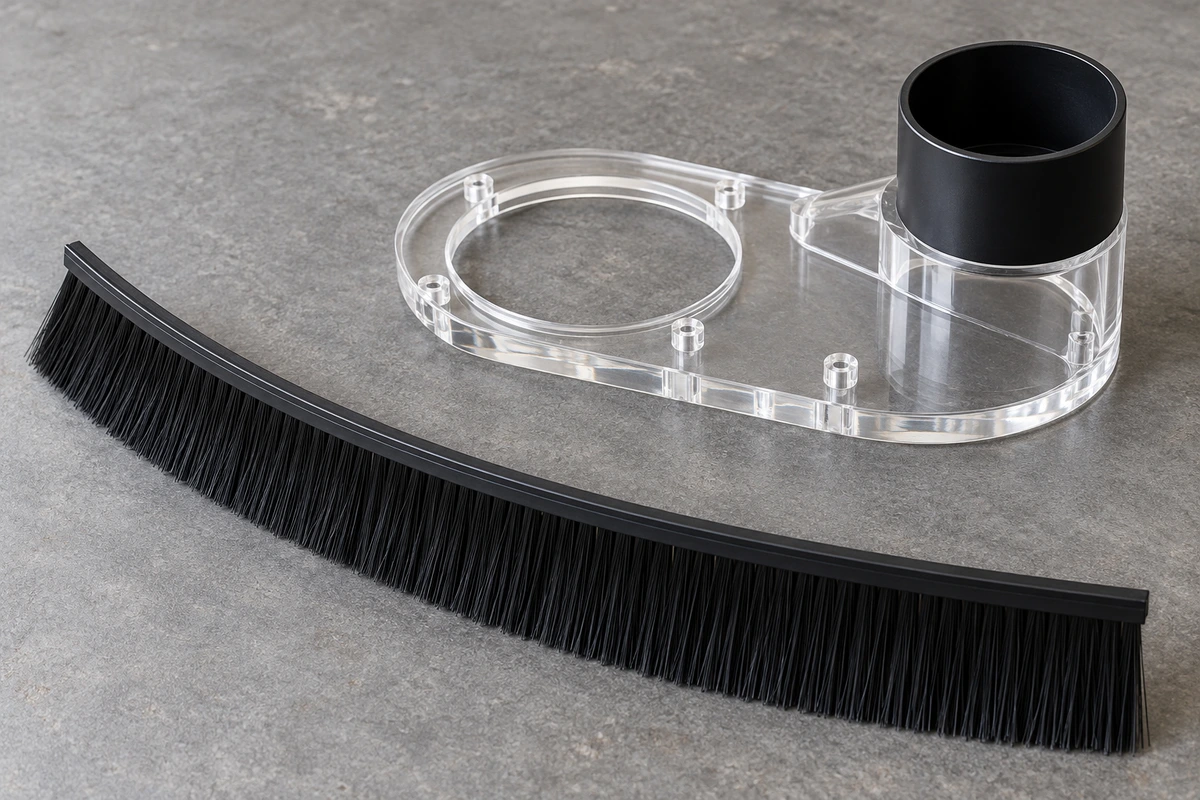
A dust-boot brush-strip reorder can be much narrower than a complete dust-boot purchase. If the technically defined requirement concerns only the replaceable brush material, the buyer should separate that material from the retained body, track and mounting components. The next question is what the seller’s quantity and size fields actually mean.
The comparison is about finished replacement material and stated supply. It does not provide fabrication, trimming or installation instructions, and it does not establish that a brush change will correct poor extraction or make damaged hardware usable.
Distinguish the material from a completed skirt
PwnCNC’s replacement brush-material page sells material by the linear inch and supplies model-related length guidance. We reviewed the current product body on 13 October 2026. This establishes a length-based consumable offer, rather than an assumption that quantity one means one complete brush skirt.
Ask the supplier to state the exact material variant, length being supplied and any preparation included in the offer. A photograph of a complete boot may illustrate an application without defining the package contents. A strip-only quotation should not silently inherit the body or mounting parts shown in that photograph.
Likewise, a ready-prepared skirt offer is a different deliverable from bulk replacement material. If a provider offers the prepared alternative, have it identify what is included and its relation to the actual boot. Keep that work in the provider’s scope rather than assuming the buyer will prepare the material.
Resolve the current size-label ambiguity
The brush-material page’s guidance tables label some 2.5-inch and 4-inch entries as brush height. The current PwnBoot page separately describes a 4-inch hose intake and 2-inch bristles. These are different named attributes; the pages do not provide a safe basis for treating similarly sized numbers as interchangeable.
Do not repeat the table’s recommended quantities as verified requirements for the buyer, or relabel its headings by inference. Send the exact boot version and unresolved size description to the supplier and request a current material specification and required supply length for that configuration.
The answer should distinguish linear strip length, bristle height and any boot or hose variant used to identify the product. If the seller replies only “4 inch,” ask which attribute it means. Preserving that unanswered question is more useful than converting an ambiguous number into a confident order line.
Make the retained hardware explicit
The technical owner should define which existing components remain within the approved scope. A brush-only purchase assumes the body and any required track or attachment components are accounted for, but purchasing should not determine their condition from appearance.
If a necessary track is missing, a quote for more brush material alone does not cover that gap. Ask for the actual missing component or a suitably scoped alternative. Conversely, if all required retained components are already accounted for, a complete-boot quote includes additional supply whose relevance needs to be stated.
A complete replacement may change more than the consumable. Do not assume that buying a new boot preserves machine clearance, tool-changing clearance or the assessed extraction arrangement. Those questions require their own applicable technical review before the alternatives can be treated as equivalent.
Compare supplied outcomes rather than inch prices
For brush material, obtain the total for the supplier-confirmed required length and variant, with delivery and any separately agreed qualified preparation. For a ready-prepared skirt or complete boot, ask for the exact included components and any work still required. Compare those actual totals on the scope the buyer needs.
A low per-inch price does not establish the cost of a complete replacement outcome. Quantity, variant and preparation may still be unresolved. Equally, a complete-boot price should not be reduced by an invented resale value for the old body or unused new components.
Keep extra ordered material visible. Where the actual supplier terms require an increment beyond the approved need, record that excess without assuming it has a future application. Unlike vacuum sealing cord, the central issue here is the replaceable bristle assembly and its distinct height, length and hardware attributes, rather than whether short remnants can be joined.
A fictional request for one skirt
Imagine a fictional requisition says “one replacement skirt” for an identified dust boot. The supplier replies with a per-inch material offer and an unresolved size selector. The buyer has a documented retained body but has not yet established whether the required brush track is accounted for. No real length, fit or product condition is assumed.
Ordering quantity one would answer neither the required strip length nor the missing hardware question. The buyer asks for a defined finished-material variant, supplier-confirmed supply length and the necessary track scope. It also requests a separately specified complete-boot alternative if the technical owner wants that option considered.
Suppose the supplier clarifies the material but leaves the track unanswered. The strip quote is now clearer, yet still incomplete for comparison with a complete boot. Preserve the outstanding component rather than declaring brush-only supply the cheaper solution. The purchasing choice becomes meaningful only when both offers address the accepted requirement.
Preserve the resolved attributes for the next order
Keep the accepted boot version, material variant, bristle-height description, supplied length and retained-component scope with the order. Record any supplier clarification of the ambiguous labels, including its date and application limits. Future buyers should not have to reconstruct that answer from a shorthand size field.
The record establishes what was bought and what remains outside the supply. It does not promise dust capture, a service interval or installation suitability. Any later change in boot configuration should reopen the affected material question before repeating the previous quantity.
Request the defined replacement supply
As an independent buying agent, we can organize supplier offers and purchasing questions within an agreed scope. Technical suitability and any physical preparation or service remain with the responsible qualified provider. See CNC dust collection, then start a CNC quote request with the product link, description or existing identification images. Arrange technical documents through a separately authorized exchange.
Frequently asked questions
Does quantity one mean one replacement dust-boot skirt?
Not on a listing sold by the linear inch. Ask for the supplier-confirmed material length, variant and included preparation for the identified boot.
Can a 4-inch hose description be used as the bristle height?
No. The reviewed pages use different attribute labels, including a 4-inch hose intake and 2-inch bristles on the PwnBoot page. Resolve the exact meaning with the supplier rather than merging the dimensions.
What if the boot body is retained but a track is missing?
A material-only offer does not automatically include the track. Have the actual missing component or alternative supply defined before comparing the total with a complete boot.
Will new brush material fix poor dust extraction?
That cannot be concluded from a consumable purchase. The actual extraction arrangement and any clearance or condition concern require the appropriate technical assessment.
Sources
Discuss a sourcing request related to this article.Buy Dust-Boot Brush Material Without Rebuying the Boot